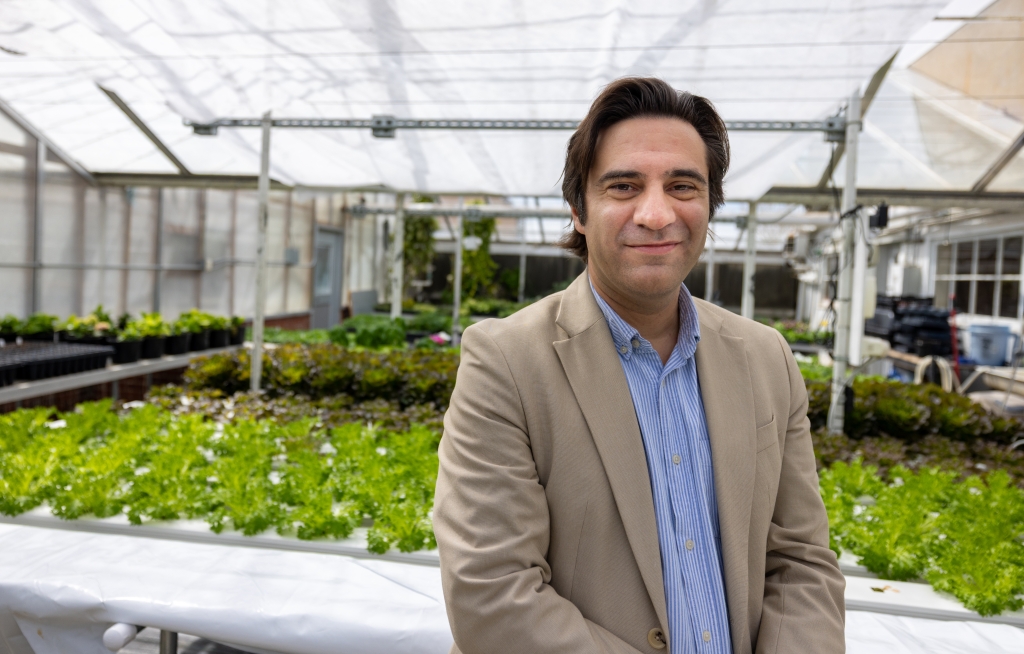
Dan Moser, March 4, 2026
Study: Reported crop yield gains from breeding may be overstated
A new study suggests that decades of reported gains in crop yields from plant breeding may be significantly overstated, challenging a common method used worldwide to measure genetic progress.
The international research team includes five University of Nebraska–Lincoln scientists. Researchers examined long-term trends in wheat improvement, finding that the standard, decades-old approach — growing older and newer wheat varieties side by side and comparing their yields — cannot clearly separate two different types of breeding gains: increases in inherent yield potential and ongoing “maintenance breeding” that keeps varieties adapted to evolving pests, diseases and changing climate conditions.
Understanding the factors driving crop yields is essential to targeting research dollars to meet a growing world population’s food needs, said Patricio Grassini, Sunkist Distinguished Professor of Agronomy and one of the researchers involved in the study, which is the subject of an article in Nature Communications.
“The increases in crop productivity we see year by year can be explained mainly by two factors,” Grassini said. “One is improved agronomic factors like, for example, fertilizers, pest control and so forth. The other is genetic improvement.”
The team used data from 849 wheat cultivars tested across 17 locations in Argentina, France, the United Kingdom and United States. The cultivars showed an overall wheat yield improvement of about 73 kilograms per hectare per year.
Only about half of that improvement is due to modern cultivars’ higher yield potential, the team’s research showed. The rest is attributable to maintenance breeding needed to counteract the yield declines of older cultivars in the face of environmental change.
Though the research team studied wheat, its findings are widely applicable to other crops.
This maintenance breeding is critical to global food security. As pathogens evolve and climate patterns shift, breeders continuously introduce traits that help wheat withstand new threats. These improvements sustain production but do not necessarily mean the crop’s maximum biological yield ceiling has increased.
Because the commonly used side-by-side comparison method does not distinguish between these factors, it may overestimate how much breeding alone has raised the intrinsic yield potential of major food crops over time, the team said.
Grassini said the findings have important implications for agricultural research policy and investment. Accurately measuring genetic gains is essential for setting realistic expectations about future crop improvement, especially as global food demand rises. Findings from this research also call for a more balanced agricultural research investment that gives equal emphasis to genetics and agronomic management
The researchers conclude that more robust evaluation methods, based on multi-environment variety trials including proper variety checks, are needed to better separate yield potential gains from maintenance breeding. Doing so would provide a clearer understanding of plant breeding’s true impact on yield potential — and help guide strategies to ensure continued progress in feeding the world.
Other authors of the article include Kenneth Cassman, Juan P. Monzon, Juan Rattalino Edreira and Jose F. Andrade of UNL; Jianguo Man, Shaobing Peng and Shen Yuan of Huazhong Agricultural University in China; Romulo Lollato of Kansas State University; Abelardo de la Vega of Corteva Agriscience; Clara Llorens of Chacra Experimental Miramar in Argentina; and Amanda de Oliveira Silva of Oklahoma State University.