
University Communication and Marketing, August 5, 2026
15 Nebraska innovators who helped shape America’s story
This is part of the America 250 series, which explores how the University of Nebraska–Lincoln’s people, discoveries and ideas have helped shape the American story.
For 250 years, America’s story has been shaped by people who challenged assumptions, pursued discovery and turned ideas into progress.
The University of Nebraska has been part of that story since its founding in 1869.
Some Huskers helped unlock the mysteries of genetics. Others transformed American literature, influenced education, shaped public leadership, advanced computing or helped improve the nation’s food supply.
As a land-grant university, Nebraska was built on the belief that knowledge should serve people. Across generations, Nebraska scholars, creators and innovators have carried that mission forward — advancing science, strengthening communities, expanding opportunity and creating ideas that reach beyond campus.
Some Huskers helped unlock the mysteries of genetics. Others transformed American literature, influenced education, shaped public leadership, advanced computing or helped improve the nation’s food supply.
Together, their stories reflect a larger American tradition: curiosity, creativity and service in pursuit of a better future.
Here are 15 University of Nebraska–Lincoln innovators whose research and creative activity became part of America’s ongoing story.
George W. Beadle
Genetics | Molecular biology | Nobel Prize
George W. Beadle’s research helped reveal one of the fundamental principles of modern biology: how genes influence the processes that sustain life.
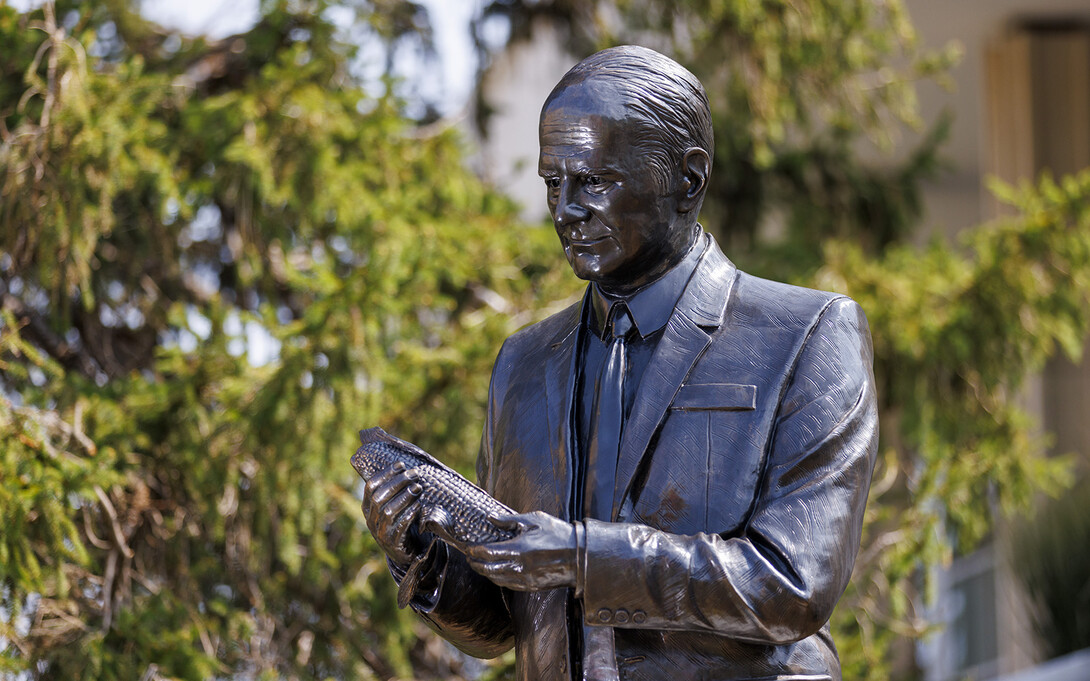
After studying at the University of Nebraska, Beadle became one of the pioneers of modern genetics. His experiments helped establish the “one gene, one enzyme” hypothesis, demonstrating that genes control biological processes through the production of specific proteins.
The discovery changed the direction of biology, helping move genetics from the study of inherited traits into a molecular science. It also opened pathways for later advances in biotechnology and genetic medicine.
Beadle shared the 1958 Nobel Prize in Physiology or Medicine for discoveries concerning genetic control of enzyme production.
His work represents a defining part of America’s tradition of scientific discovery — using research to answer fundamental questions and improve the future of human health.
Gladys Henry Dick
Medicine | Infectious disease | Immunology

During an era when scarlet fever threatened communities across the country, Gladys Henry Dick pursued research that helped scientists better understand infectious disease and immunity.
A University of Nebraska alumna, Dick and her husband, George Dick, studied the toxin produced by the bacteria responsible for scarlet fever. Their work contributed to diagnostic methods and expanded knowledge of how the human body responds to infection.
Her research came during a period of major medical advancement in America, as scientists worked to uncover the causes of disease and develop better approaches to prevention and treatment.
Dick’s contributions became part of the scientific foundation that continues to guide immunology and infectious disease research.
Read more about her work and modern legacy of infectious disease research at the University of Nebraska–Lincoln.
Edith Schwartz Clements
Ecology | Environmental science | Botany
Long before environmental science became a national priority, Edith Schwartz Clements was studying the relationships between plants, landscapes and the natural world.
At the University of Nebraska, Clements researched plant communities and environmental relationships, helping scientists understand ecosystems as connected systems rather than collections of separate species.
Her work contributed to new ideas about plant succession, landscapes and the interactions among living organisms and their surroundings.
Clements’ research helped establish concepts that remain central to ecological science and reflect a long American tradition of studying and understanding the natural world.
Charles Edwin Bessey
Botany | Plant science | Scientific leadership
Charles Edwin Bessey helped shape the University of Nebraska’s early identity as a place of scientific discovery.
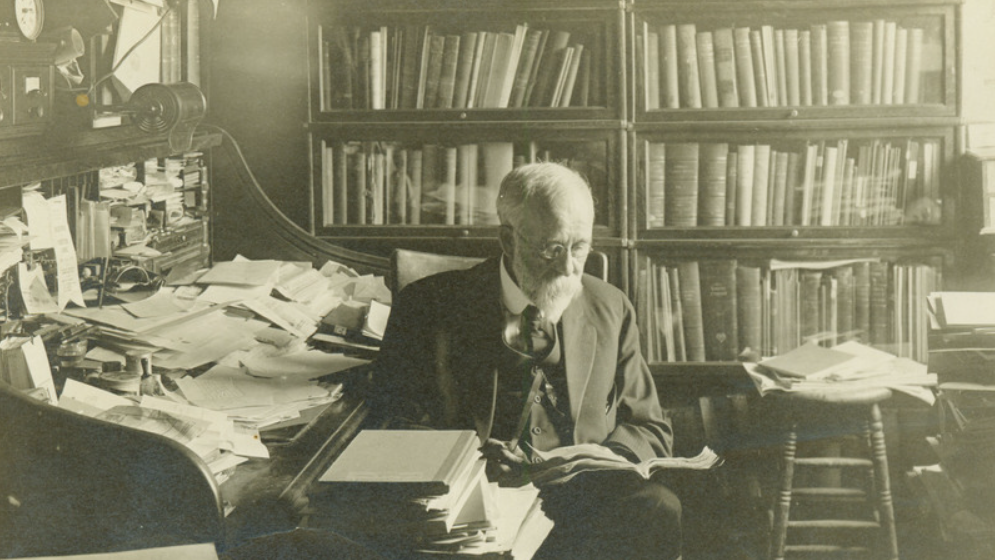
Charles E. Bessey in his office at the University of Nebraska.
A pioneering botanist, educator and university leader, Bessey promoted experimental approaches to plant science at a time when much of the field focused primarily on classification. He encouraged students and researchers to examine the natural world through observation, investigation and evidence.
Beyond his own research, Bessey helped strengthen Nebraska’s scientific culture and influenced generations of students.
His work reflected the growing role of American universities as centers of research, education and public service.
Rachel Lloyd
Chemistry | Women in science | Agricultural chemistry
Rachel Lloyd built a scientific career at a time when women faced significant barriers in higher education and research.
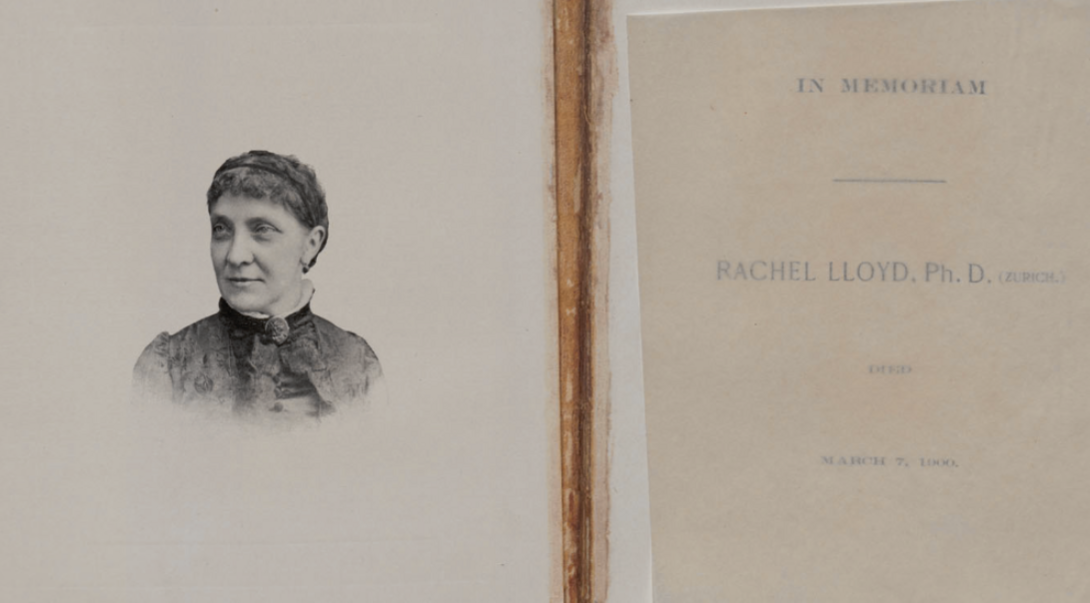
The frontispiece of Clement Lloyd’s biography contained a high-resolution version of the only known photo of Rachel Lloyd.
One of the first women in the United States to earn a doctorate in chemistry, Lloyd became a pioneering researcher and longtime University of Nebraska faculty member. Her work included contributions to organic chemistry and agricultural chemistry.
Her achievements challenged expectations about who could lead scientific research and helped expand opportunities for future generations of women in science.
Lloyd’s career reflects an important part of America’s history: the ongoing expansion of opportunity through education and discovery.
Jay Wright Forrester
Computing | Computer engineering | Systems science

Jay Wright Forrester helped build the foundation for the digital world.
A University of Nebraska engineering graduate, Forrester became one of the pioneers of modern computing. At MIT, he led work on the Whirlwind computer project and invented magnetic-core memory, a technology that became the dominant form of computer memory for decades.
The innovation helped make computers faster, more reliable and more practical for widespread use.
Forrester later created the field of system dynamics, using computer models to study complex systems ranging from organizations to cities.
His work represents a major chapter in America’s technology story — showing how research and engineering can transform the way people solve problems.
Donald Othmer
Chemical engineering | Industrial innovation
Donald Othmer showed how university knowledge could become a force for industrial progress.
A University of Nebraska alumnus, Othmer became one of the leading chemical engineers of the 20th century through his research, teaching and leadership.
He is best known for creating the Kirk-Othmer Encyclopedia of Chemical Technology, a landmark reference work that organized knowledge across the chemical sciences and became an important resource for engineers and researchers.
Othmer’s career reflected the connection between American universities and industry — turning scientific understanding into practical solutions that improve everyday life.
C. Edward McVaney
Business innovation | Enterprise software | Entrepreneurship
C. Edward McVaney saw the potential of software to change how businesses operate.
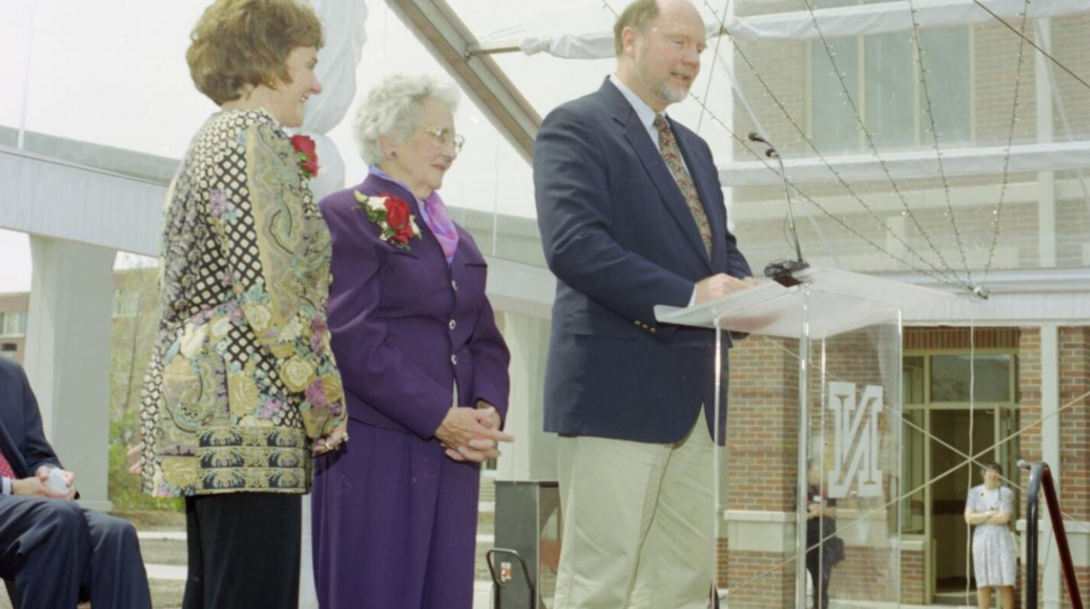
Ed McVaney, speaking during the Kauffman Academic Residential Center dedication, with Esther Kauffman, Ed’s mother-in-law and the building’s namesake, at his right.
A University of Nebraska engineering graduate, McVaney co-founded JD Edwards & Company, a pioneer in enterprise software. The company developed systems that helped organizations manage manufacturing, finance, supply chains and operations.
Before integrated business software became standard, McVaney helped create tools that allowed companies to connect information and make better decisions.
His career reflects another part of America’s innovation story: entrepreneurs transforming technical knowledge into products that reshape industries.
Willa Cather
Literature | Creative writing | Pulitzer Prize
Willa Cather captured the changing American experience through stories of place, identity and belonging.
A University of Nebraska alumna, Cather drew inspiration from Nebraska landscapes and communities during her formative years. Her novels, including “O Pioneers!,” “My Ántonia” and “One of Ours,” became enduring works of American literature.
She received the 1923 Pulitzer Prize for fiction for “One of Ours.”
Cather’s writing showed how local stories could reveal universal truths — a lasting contribution to American culture and the nation’s literary heritage.
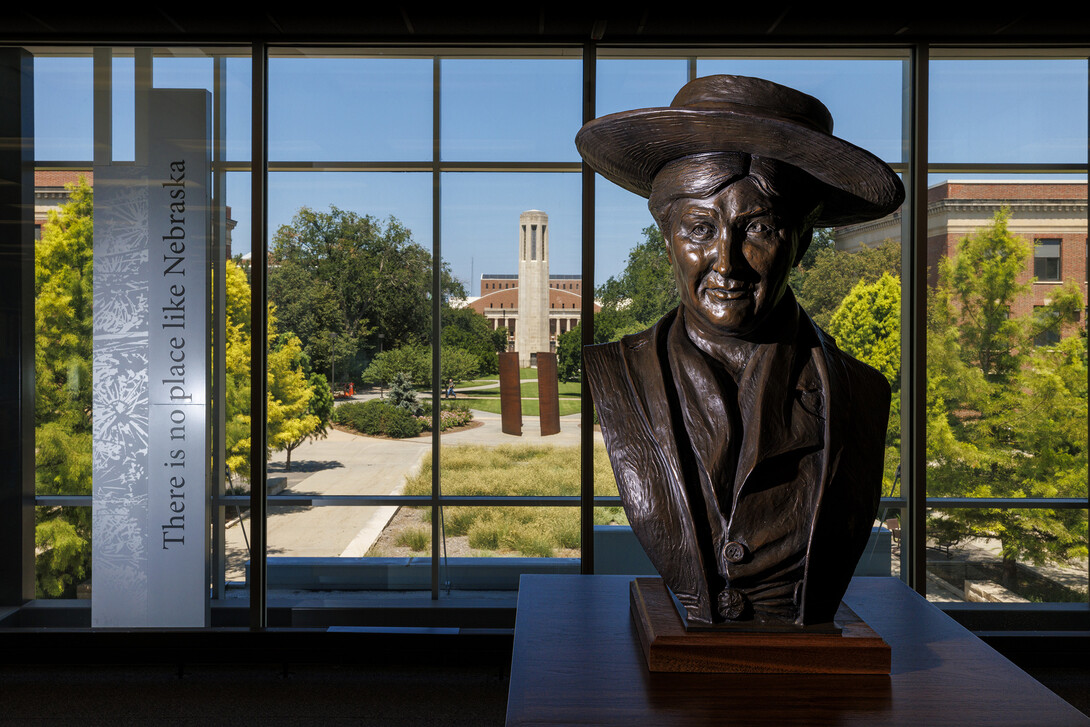
A bronze bust of acclaimed author and 1895 University of Nebraska graduate Willa Cather, sculpted by Littleton Alston, is on permanent display on the second floor of Love Library North. Cather is best known for novels that vividly portray frontier life on the Great Plains.
Leta Stetter Hollingworth
Educational psychology | Gifted education | Women in science
Leta Stetter Hollingworth challenged long-held ideas about intelligence, learning and opportunity.
A University of Nebraska alumna, Hollingworth became one of the founders of modern educational psychology. Her research on gifted children helped establish more scientific approaches to identifying and educating exceptional students.
She also challenged assumptions about women’s intellectual abilities at a time when those beliefs limited educational and professional opportunities.
Hollingworth’s work helped shape American education by expanding ideas about potential, achievement and access to opportunity.
Louise Pound
Linguistics | Folklore | Humanities scholarship

Louise Pound helped change how Americans viewed language, culture and everyday expression.
A University of Nebraska alumna and longtime faculty member, Pound became a nationally recognized scholar of English language, dialects and folklore. She was the first woman president of the Modern Language Association.
Her research demonstrated that regional speech and everyday language were worthy subjects of serious academic study. That work helped shape modern approaches to linguistics and folklore.
Pound’s career reflects a broader American tradition of preserving and studying the voices, experiences and cultures that define the nation.
Pound’s legacy will be honored during summer commencement on Aug. 15.
Loren Eiseley
Anthropology | Natural history | Science communication
Loren Eiseley brought science to new audiences through writing that combined research, reflection and storytelling.
A University of Nebraska alumnus, Eiseley became one of the most influential science writers of the 20th century. Through essays and books, he explored evolution, anthropology, humanity and the natural world.
His work introduced generations of readers to scientific ideas while encouraging deeper questions about humanity’s place in the universe.
Eiseley demonstrated the power of communication in advancing discovery — showing that science does not only happen in laboratories, but also through conversations that inspire curiosity and understanding.
A University of Nebraska alumna, Cather drew inspiration from Nebraska landscapes and communities during her formative years. Her novels, including “O Pioneers!,” “My Ántonia” and “One of Ours,” became enduring works of American literature.
She received the 1923 Pulitzer Prize for fiction for “One of Ours.”
Cather’s writing showed how local stories could reveal universal truths — a lasting contribution to American culture and the nation’s literary heritage.
Video: Loren Eisely’s reflections on the Depression
Ted Sorensen
Public writing | Political communication | Civic leadership

Ted Sorensen showed how words could shape public life.
A University of Nebraska alumnus, Sorensen became a close adviser and speechwriter to President John F. Kennedy. His writing helped define the communication style of the Kennedy administration and influenced generations of public leaders.
He also contributed to “Profiles in Courage,” which received the Pulitzer Prize for biography.
Sorensen’s career reflects the role of writing and civic engagement in American history — using ideas and language to help shape national conversations.
P. Stephen Baenziger
Plant breeding | Food security | Agricultural science
Improving food production has been a central part of Nebraska’s contribution to America’s agricultural story, and P. Stephen Baenziger carried that work forward through plant breeding.
A University of Nebraska scientist, Baenziger advanced wheat breeding and crop improvement efforts focused on developing varieties with improved quality, productivity and resilience.
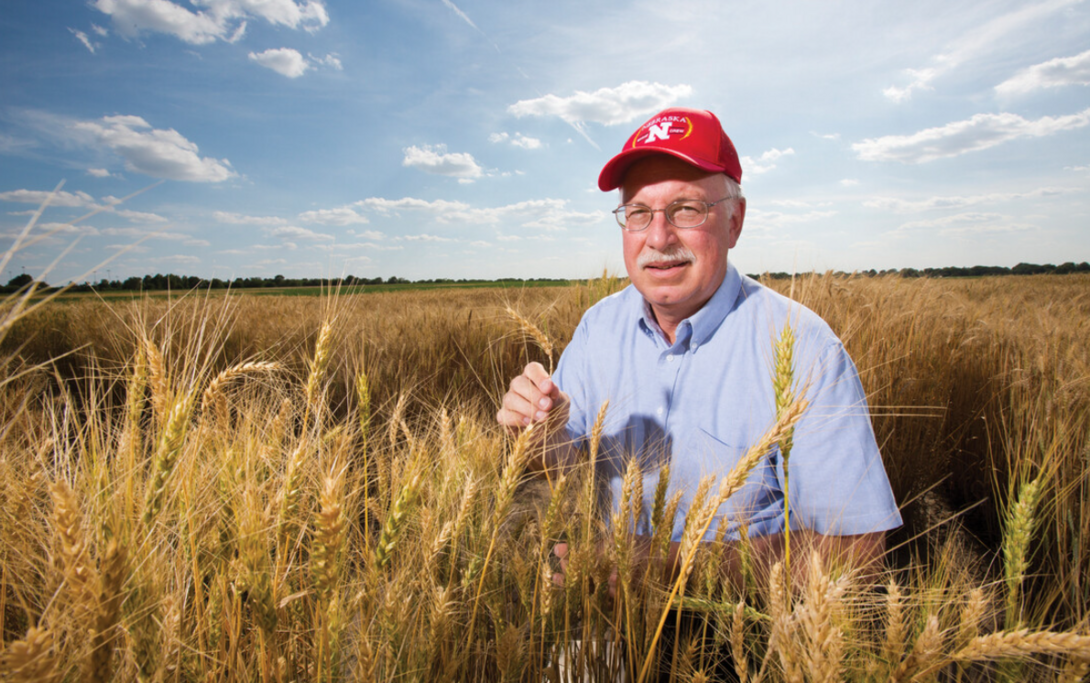
His research reflects the land-grant mission: applying science to challenges faced by farmers, communities and people around the world.
As agriculture faces new challenges, including changing climate conditions and growing demand for food, crop science remains essential to the nation’s future.
Frank W. Cyr
Education | Rural schools | Public impact

Courtesy
A safer journey to school began with research into a challenge facing rural communities.
University of Nebraska alumnus Frank W. Cyr became known as the “Father of the Yellow School Bus” after studying transportation challenges in rural education. His work led to a 1939 conference that established national standards for school buses.
Among the conference’s outcomes was the adoption of a standardized yellow color for school buses, creating a safety feature recognized across the country.
Cyr’s story shows that innovation is not limited to laboratories and technology. It can also come from improving the systems that help people access education and opportunity.
A University of Nebraska scientist, Baenziger advanced wheat breeding and crop improvement efforts focused on developing varieties with improved quality, productivity and resilience.
His research reflects the land-grant mission: applying science to challenges faced by farmers, communities and people around the world.
As agriculture faces new challenges, including changing climate conditions and growing demand for food, crop science remains essential to the nation’s future.