Posted October 30, 2026 by Tiffany Lee
In case you missed these stories highlighting research and creative endeavors at the University of Nebraska-Lincoln, the Office of Research and Innovation’s communications team has compiled a roundup of some top research stories from research.unl.edu and other sources.
Saraf’s team pioneers technique to measure multiple reactions on single electrode
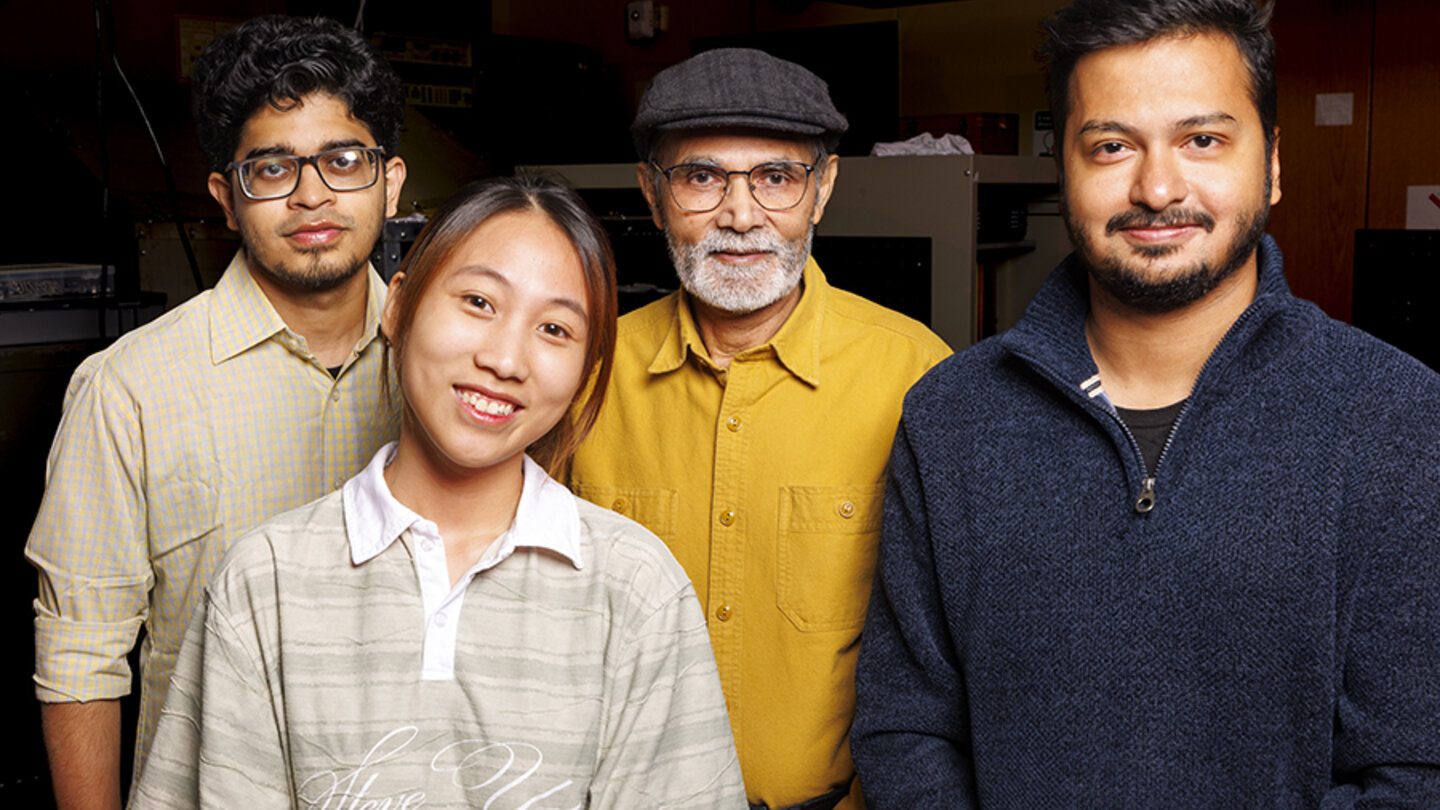
Who: Ravi Saraf, Lowell E. and Betty Anderson Distinguished Professor of chemical and biomolecular engineering; Linh Hua, Md Tawfiq Anik and Joydip Dey, graduate students in chemical and biomolecular engineering
What: In two recently published studies, Saraf’s team describe an optical-electrochemical technique capable of detecting chemical reactions involving as few as 600 molecules, while examining activity at different locations on a single electrode. The findings culminate more than a decade of work aimed at distinguishing many reactions on the same electrode. The team’s instrument, the Scanning Electrometer for Electrical Double-layer (SEED), uses light to measure multiple reactions on a single electrode, an approach that allows the tool to operate at higher speeds and with extraordinary sensitivity compared to conventional sensors. The capabilities could have application far beyond the laboratory, including in microRNA-based techniques for early diagnostics and assessment of radiation exposure. The tool may also enable researchers to rapidly compare catalysts, corrosion-resistant materials and other chemical systems. The work was supported by the National Institutes of Health.
“The idea of using optics to measure electrochemical reaction is decades old,” Saraf said. “Our innovation was a simple method that allowed us to measure reaction at very fast rates and push farther than we’ve ever gone before.”
Writer: Karl Vogel, College of Engineering
Stoller earns NASA fellowship to advance work on cooling powerful electronics
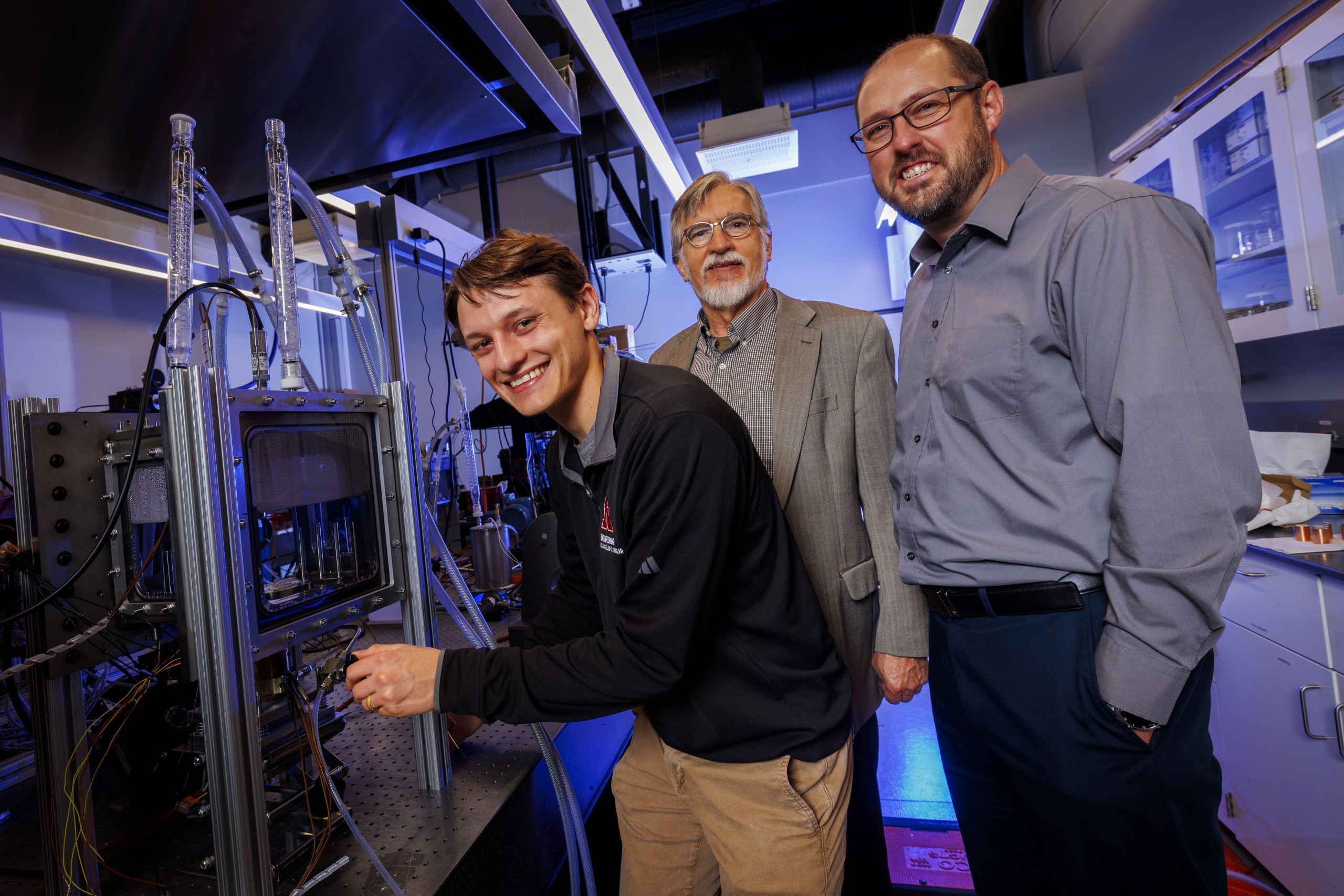
Who: Truman Stoller, doctoral student in mechanical engineering; George Gogos, Wilmer J. and Sally Hergenrader Chair and professor of mechanical engineering; Craig Zuhlke, Richard L. McNeel Associate Professor of Engineering in electrical and computer engineering
What: Stoller is the third Husker engineering student in 12 years to receive a NASA Space Technology Graduate Research Opportunities Fellowship, a highly competitive recognition that provides more than $250,000 over three years and pairs students with NASA researchers for 10-week summer placements. Stoller, a member of the Multiscale Heat Transfer Laboratory, is co-advised by Gogos and Zuhlke and focuses his work on developing a high-performing heat pipe – a device critical to cooling increasingly powerful electronics, spacecraft systems and more. Traditional heat pipes function using a wick structure: liquid absorbs heat and evaporates, the vapor travels to a cooler region and condenses back into liquid, and then a porous lining facilitates wicking that moves the liquid back to the heat source. Stoller’s approach is to design a wickless heat pipe by using advanced laser-processing techniques to functionalize the pipe’s interior, creating a surface that naturally wicks. This will improve performance and allow engineers to tailor heat pipes to optimize fluid movement for different applications. The innovation could be critical to improving modern electronics, spacecraft systems and advanced aerospace applications.
“This fellowship opens doors I never imagined,” Stoller said. “Working with NASA researchers, seeing the kinds of problems they’re solving and being part of that environment is going to be incredibly important for whatever comes next.”
Writer: Karl Vogel, College of Engineering
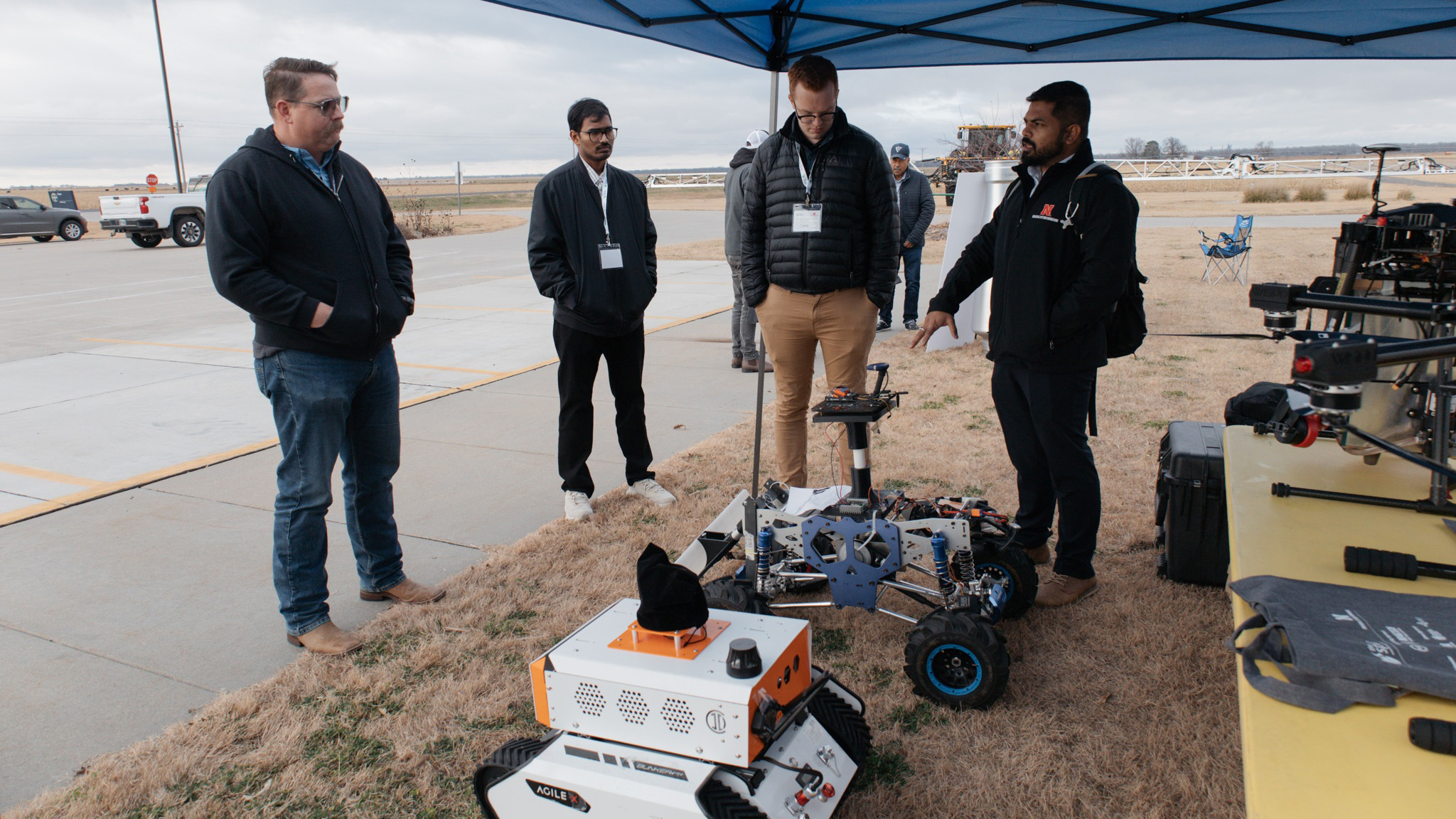
Spur Ventures strengthens Nebraska’s ag tech ecosystem
Who: Ankit Chandra, leader of Spur Ventures and director and lecturer of entrepreneurship for the Department of Biological Systems Engineering
What: Spur Ventures, a University of Nebraska-Lincoln initiative, is connecting producers, startups, industry, investors and students to accelerate the development, validation and commercialization of agricultural technologies. Housed in the Department of Biological Systems Engineering and the Institute of Agriculture and Natural Resources, the platform is filling a gap in the state’s agricultural technology sector by serving as a hub for various stakeholders. It developed the Spur Validation Sandbox Program, which is an independent, third-party validation for startups that provides evidence-based evaluations of emerging agricultural technologies. It also provides ag tech entrepreneurship education, including a class where farmers present problems and students develop tailored solutions. On Nov. 17-18, Spur will host AgConverge in Grand Island, an event that will feature a wide range of ag tech events, including the Farm Tech Adoption Challenge, where volunteer panels of farmers and rangers will listen to pitches from ag tech startups and provide detailed, multi-round feedback.
“In ag tech, a lot of cool technologies are coming in play but in many cases they don’t get adopted at the farm gate because they were not co-created with farmers,” Chandra said. “The engineers didn’t always understand farmers’ challenges.”
Writer: Geitner Simmons, Institute of Agriculture and Natural Resources
Research-practice collaboration strengthens Nebraska’s multi-tiered system of support
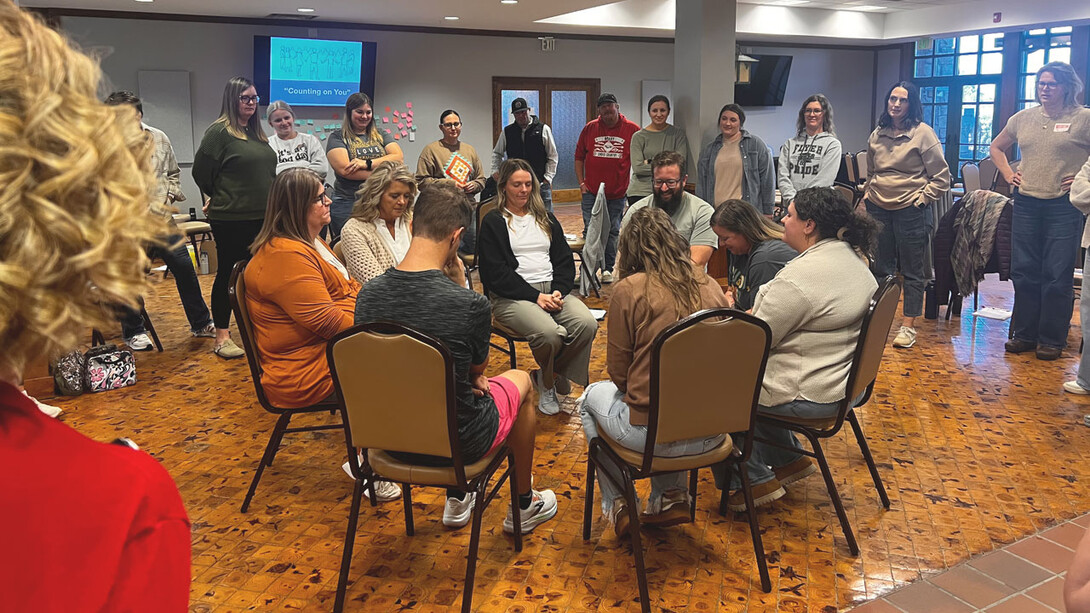
Who: Amanda Witte, research associate professor at the Nebraska Center for Children, Youth, Families and Schools; Scott Eckman, program coordinator at the Nebraska Department of Education
What: Funded by the U.S. Department of Education, the Nebraska State Personnel Development Grant program provides training, coaching and consultation aligned with Nebraska’s Multi-tiered System of Support, a framework designed to improve educational outcomes for all students. Witte collaborates with the Nebraska Department of Education and other Nebraska educators, administrators and state agencies to implement evidence-based professional development opportunities. A major focus is restorative practices, which emphasize empathy, accountability, relationship-building and repairing harm rather than punishment. Since 2024, about 700 people statewide have been trained in restorative practices. Participating districts have reported that the strategy has led to lower rates of chronic absenteeism and suspensions. The approach has helped Lexington Public Schools support students and staff affected by the closure of Tyson Foods in January.
“The work is not only grounded in solid research evidence, but we are also gathering tons of information from our school partners to shape the professional development we deliver and assess its effect on adult and student outcomes,” Witte said.
Writer: Chuck Green, Kindred Media
Innovative food processing technique boosts Nebraska companies, educational outreach
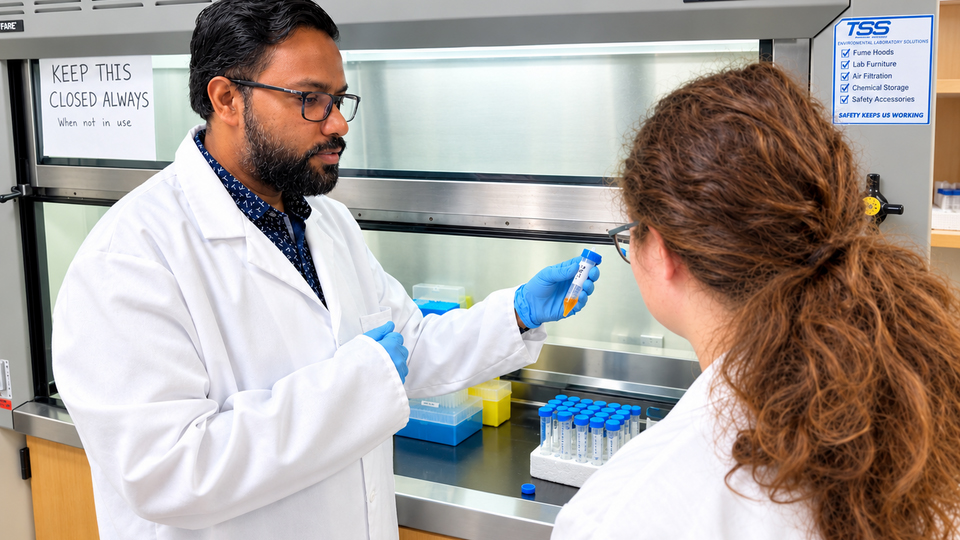
Who: Mary-Grace Danao, research associate professor of food science and technology and biological systems engineering
What: Danao’s leadership, strategic visioning and partnerships with the private sector have placed UNL at the forefront of high-pressure processing-focused food safety research. High-pressure processing, or HPP, is an increasingly popular pasteurization technique that uses extraordinary pressure to remove pathogens from food while extending shelf life and maintaining nutrition. The technique is gaining momentum in the food industry – for both human and pet food – in response to consumer demand for minimally processed foods. It’s particularly relevant in the raw pet food sector, which is the fastest-growing segment of the pet food industry. Danao, housed in the Food Processing Center, played a key role in securing the HPP equipment, which has capabilities and versatility beyond those at other universities. She also provides product-specific training for food industry personnel and others. Danao and collaborators are exploring HPP’s role in improving the marketability of dark-cutting beef and containing avian influenza, among other applications.
“Lincoln, Nebraska, truly is the HPP capital of North America. Within a five-mile radius, the concentration of HPP expertise, capacity, equipment – it’s here. So, if you want to know HPP, you come to Lincoln, Nebraska,” Danao said.
Writer: Geitner Simmons, Institute of Agriculture and Natural Resources Communications

Husker researchers explore hidden nitrogen, new ways to reduce groundwater risk
Who: Arindam Malakar, assistant research professor at the Nebraska Water Center and the Daugherty Water for Food Global Institute
What: Malakar leads a research team that recently received two grants to investigate groundwater contamination, a problem that threatens drinking water supplies, agricultural production and the health of rural communities. With a $496,722 award from the National Science Foundation, the researchers will explore an understudied reservoir of organic nitrogen: the historical nitrogen stores buried in the deep vadose zone, which is located between the land surface and the water table. After nitrogen fertilizer is applied and plants take up the nutrients they need, remaining nitrogen converts into mobile nitrate. The researchers are investigating whether this mobile nitrate reacts with soil carbon through microbes, causing it to become bound as organic nitrogen in the deeper soil layers. This could create a slow-release reservoir that generates groundwater-contaminating nitrate years into the future. The team will use a $570,000 grant from the Nebraska Corn Board to study a novel nitrate remediation approach aimed at reducing the cost of treating water. The strategy is to manage nitrate in the vadose zone before it enters drinking water sources, which is likely more economical and efficient than treating water after it reaches the aquifer.
“By the time you see nitrate in a well, the decision that put it there was made a long time ago,” Malakar said. “Once it’s in the aquifer, you’re paying to take it back out.”
Writer: Ann Briggs, Nebraska Water Center
Regulating emotions and focus, one musical beat at a time
Who: Sungeun Kang, assistant professor of educational psychology; Carrie Clark, associate professor of educational psychology and director of the Developmental and Learning Sciences program
What: Kang and Clark are using a grant from the Office of Research and Innovation to conduct a pilot study that explores whether integrating music with relaxation activities, such as breathing exercises, may support emotional regulation and engagement among autistic children. About a dozen children from Nebraska will wear an Actiheart – a compact device worn on the chest that records physiological measures like heart-rate variability – while engaging in the music-oriented activities, enabling the researchers to examine patterns of physiological regulation. Caregivers will also provide information about how children use and respond to music in everyday life. The findings will be used to develop and evaluate enhanced interventions that support emotional and physiological regulation in autistic youth. Kang, whose previous clinical work included music therapy, said the project is an opportunity to harness the power of music in children’s day-to-day lives.
“I experienced first-hand how many of these children were naturally drawn to music,” Kang said. “Music created opportunities for connection, engagement and self-expression. I’m excited to have the chance to formally study whether music can be incorporated into emotion regulation supports, and to better understand how it may help.”
Writer: Chuck Green, Kindred Media

Nebraska teams with USGS to create new statewide surface geologic map
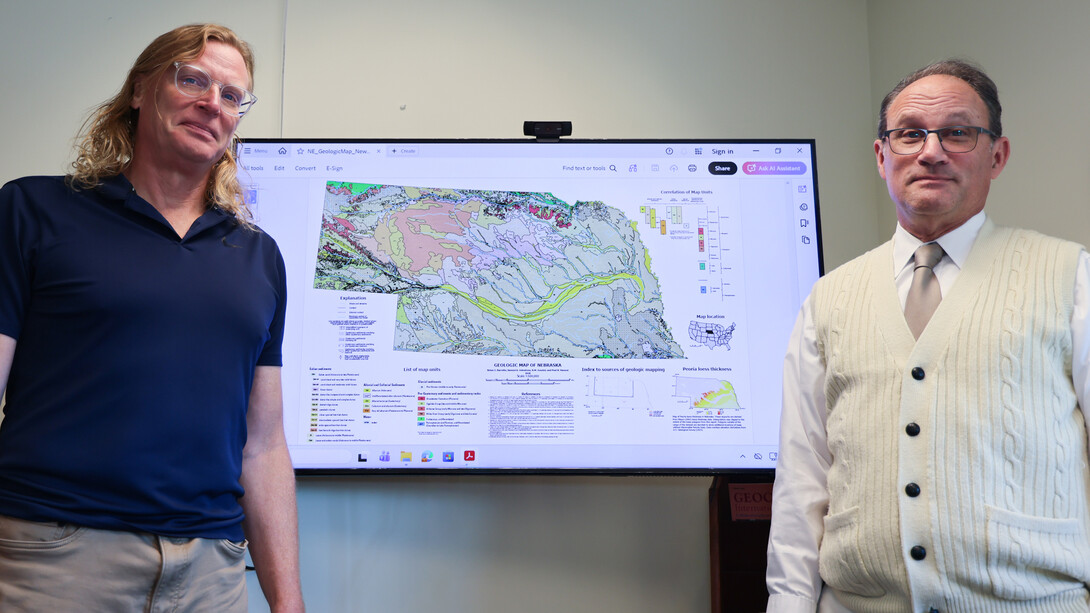
Who: Paul Hanson, professor in the Conservation and Survey Division and School of Natural Resources; Matthew Joeckel, professor in the School of Natural Resources and CSD director
What: Hanson and Joeckel teamed up with the U.S. Geological Survey to create the first-ever statewide map showing Nebraska’s surficial geology, which the USGS has made available online. The map has new, more accurate lines showing alluvial contours – the patterns left behind by rivers and streams – and other dimensions that required meticulous scientific work, which the team described in a Journal of Maps publication. The project highlighted the major role played over time by wind-blown effects: The team’s analysis revealed that wind-blown sand, silt and other sediments cover more than 75% of the state. The map also delineates watersheds in much of the state, which will help irrigators and water management agencies pinpoint groundwater locations. The team used modern tools like geographic information system software, light detection, ranging remote-sensing technology and satellite imagery to develop the map. The tool is an important new resource for understanding water management, wildlife habitat, geohazards and construction material availability. It also illuminates the connection between Nebraska’s geologic present to its deep past.
“Some of Nebraska’s exposed ground conditions have been there for millions of years,” Hanson said. “Those time periods are so long that they’re hard to fathom.”
Writer: Geitner Simmons, Institute of Agriculture and Natural Resources