
Materials Research Science and Engineering Center
Office of Research and Innovation, July 30, 2026
Husker team earns elite NSF award to drive next generation of materials research
The University of Nebraska–Lincoln will establish a Materials Research Science and Engineering Center after earning a highly competitive six-year, $18 million grant from the National Science Foundation.
Nebraska is one of six institutions to receive funding this year through NSF’s MRSEC program, which has helped put the U.S. at the forefront of scientific advancement for more than 50 years.
The interdisciplinary center will explore fundamental questions in quantum materials, advancing scientific understanding of ultra-thin materials that are key to faster computers, more energy-efficient artificial intelligence and brain-inspired computing.
“We’re thrilled that NSF has selected UNL to once again house a MRSEC, which reflects our university’s long-standing commitment to and investment in materials science research,” said Jen Nelson, vice chancellor for research and innovation. “The field is increasingly critical because advanced materials are the foundation for the technologies that will define the future, including AI and advanced communications networks. With this award, Husker researchers are positioned to solve the complex challenges facing next-generation technologies and extend Nebraska’s more than half a century of leadership in the materials science field.”
The center — named Atomically Engineered Materials, or AtEM — will have two interdisciplinary research groups, educational outreach and workforce development programs, and Nebraska’s cutting-edge facilities to support its mission.
The center builds on the university’s major discoveries in understanding magnetic materials and structures at the nanometer scale accomplished through collaborative research at the Nebraska Center for Materials and Nanoscience, established in 1988; EQUATE: Emergent Quantum Materials and Technologies Center, funded by NSF’s Established Program to Stimulate Competitive Research; and UNL’s previous MRSEC, P-Spins: Polarization and Spin Phenomena in Nanoferroic Structures, which operated from 2002 to 2020.
Researchers aim to fabricate quantum materials with exceptional control at the atomic level. Such precision allows researchers to investigate how variations in atomic structure and chemical composition affect a material’s properties, such as its magnetic, electrical and optical behaviors. They’ll apply what they learn to develop proof-of-principle devices to further investigate the materials’ properties. Controlling these properties can lead to technological advancements.

“The ultimate dream of a material designer is to have full control over where you put an atom in space and how that atom interacts with other atoms next to it,” said Christian Binek, Paula and D.B. Varner Professor of physics, who will direct the new center. “If you had full control over the structure and chemical composition of the material, you couldn’t do better than that. You could create whatever you want.”
Xia Hong, professor of physics and astronomy, and Xiaoshan Xu, Susan J. Rosowski Professor of physics and astronomy, will co-lead one of the research groups, which will study how twisting stacks of atomic-thin materials create new electronic and magnetic behaviors. The research could ultimately lead to faster, more energy-efficient magnetic-based electronic devices and computing systems that resemble a brain’s neural network.
“Data centers consume horrible amounts of energy and, unfortunately, water for cooling,” Binek said. “A human brain runs on 20 watts of power. They are far superior energy consumers. With artificial neurons, we would get at least a little closer to mimic what nature does.”
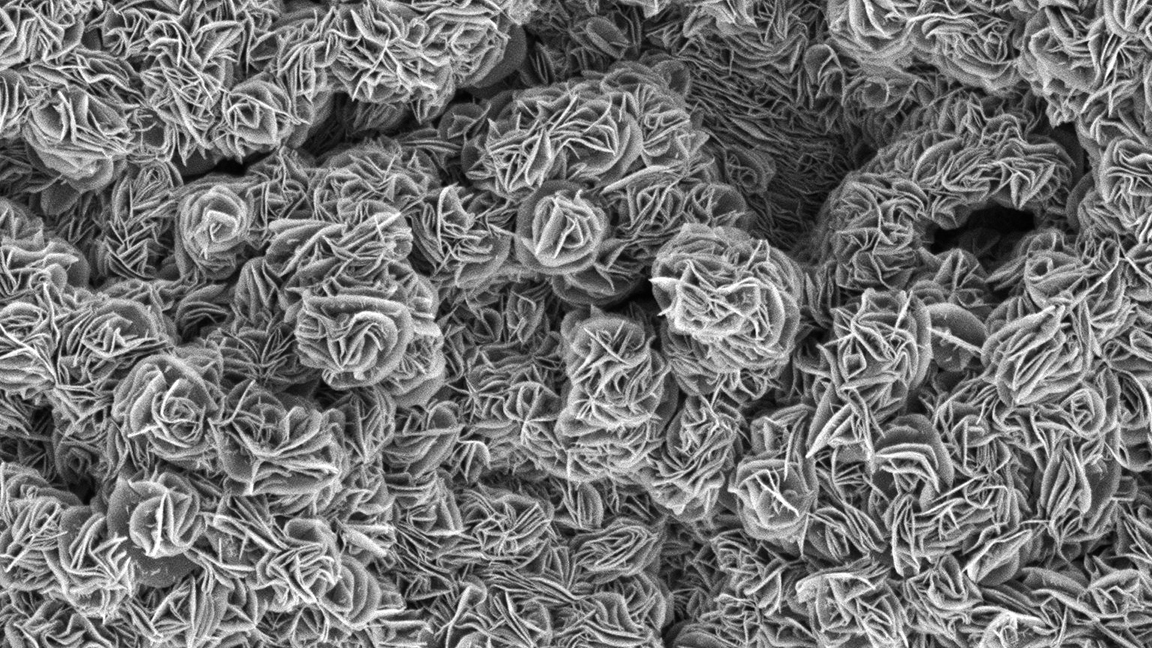
The second research group, led by Alexander Sinitskii, Charles Bessey Professor of inorganic chemistry, and Rebecca Lai, professor of analytical chemistry, will focus on a new family of atom-thin materials with promising electronic properties called MXenes (pictured above). The team will explore how modifying MXene chemical composition and structure at the atomic level alters optical, electrical and magnetic properties.
The research could lead to improving electromagnetic shielding, advancing optical devices and developing new categories of molecular sensors with advanced capabilities, such as the ability to determine the direction of a molecule’s rotation. This property, called chirality, is important in drug development, for example, because rotational direction can dictate whether a drug is therapeutic or toxic.
The researchers will use Nebraska’s world-class facilities, including the Nanofabrication Cleanroom Facility, which enables researchers to create prototype devices at the nanometer scale; the Electron Nanoscopy Instrumentation Facility, which allows for viewing structures at the atomic level; and X-ray diffraction and other characterization techniques to better understand quantum material properties.
Eva Schubert, professor of electrical and computer engineering and AtEM associate director, will lead the center’s education programs, including continuing the university’s long-standing efforts to introduce schoolchildren and their teachers to materials science. The programs will also incorporate advanced tools, such as augmented reality, to explain complex concepts to Nebraska students in new ways. Collectively, these programs will help prepare the next generation to join the technology workforce.
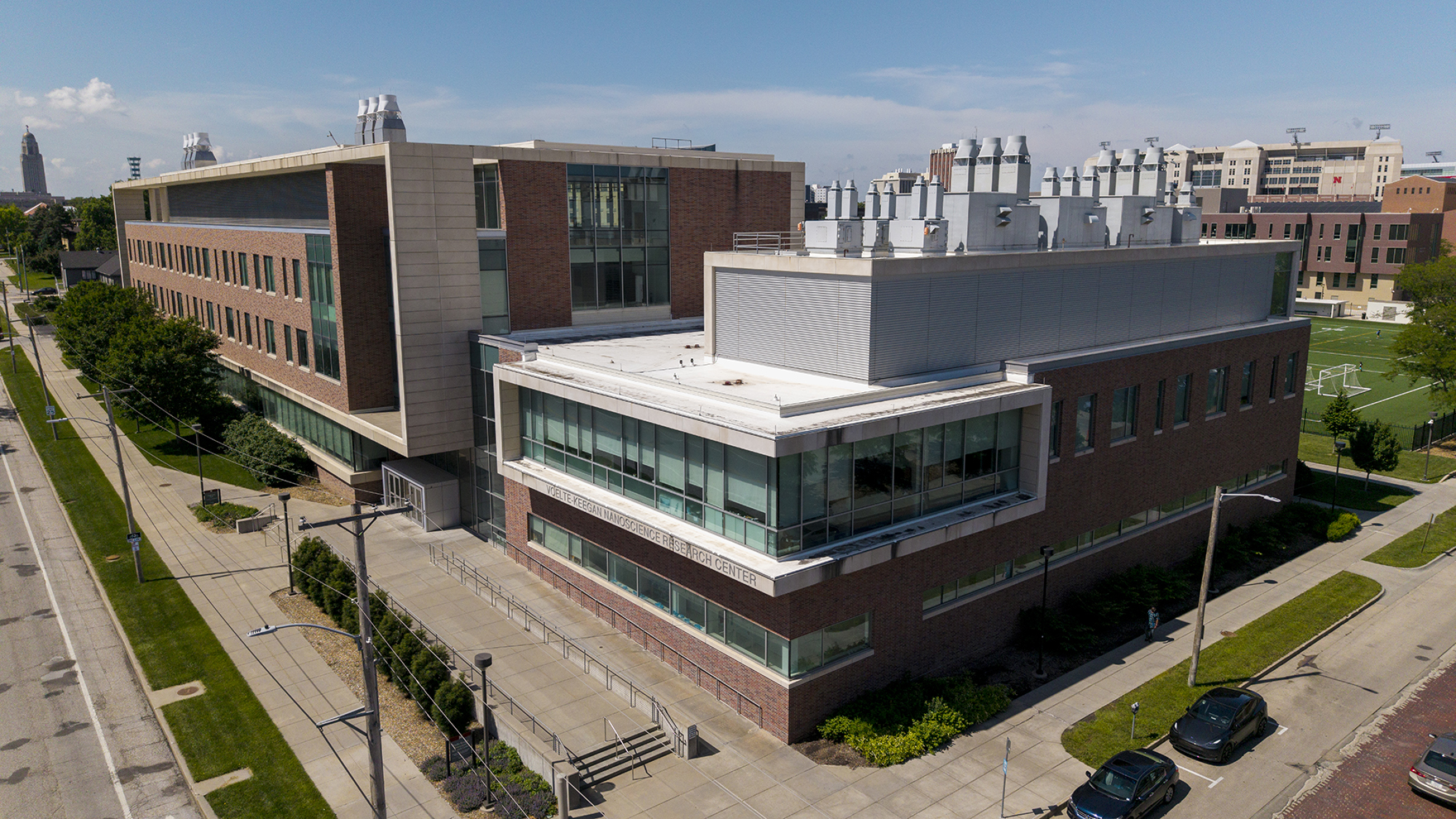
The Atomically Engineered Materials Center includes 16 University of Nebraska–Lincoln faculty from the departments of physics and astronomy, chemistry, electrical and computer engineering, mechanical and materials engineering, and chemical and biomolecular engineering. Faculty will collaborate with other institutions and industry.
“We have a long tradition of making things happen through synergy,” Binek said. “This is not just 16 individuals, but a team of theorists and experimentalists: physicists talking to chemists talking to engineers. These different perspectives focused on the same problem create something that the individual cannot.”
Materials Research Science and Engineering Centers are NSF-funded centers of excellence that conduct fundamental materials research and education at the nation’s leading research institutions.
The University of Nebraska–Lincoln is the only institution from an EPSCoR jurisdiction to receive a MRSEC award in 2026. EPSCoR enhances the research competitiveness of targeted geographic areas by strengthening science, technology, engineering and mathematics capacity and capability through diverse investments.