Dan Moser, September 4, 2026
New proteomics equipment expands core facility’s capabilities
This is the sixth story in a series featuring UNL’s research core facilities and their capabilities.
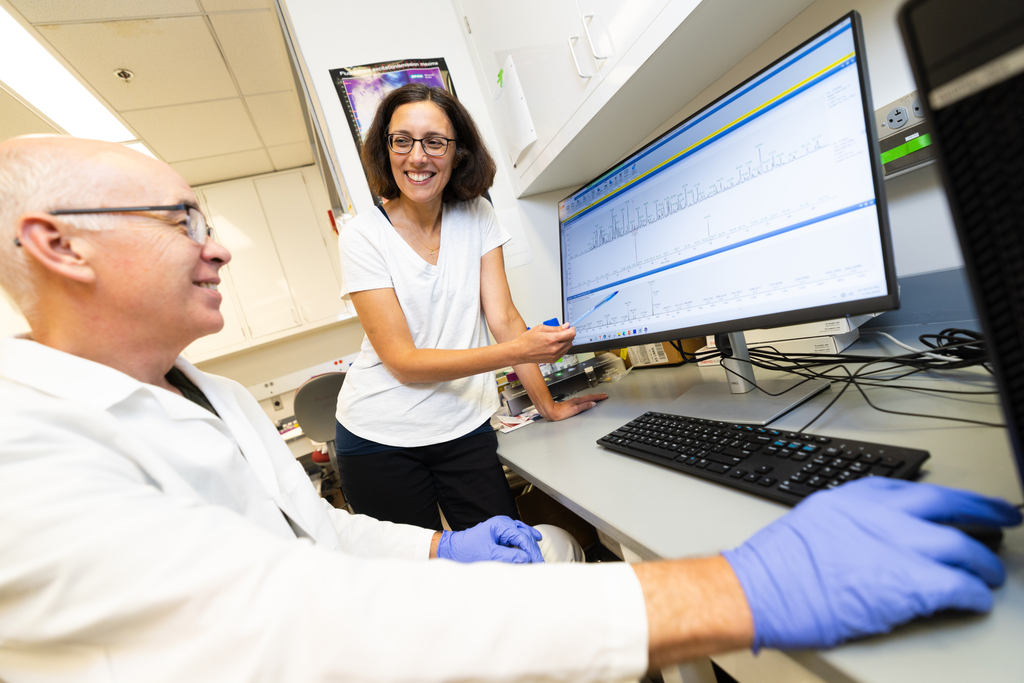
Researchers at the University of Nebraska–Lincoln and other institutions now have access to one of the most advanced platforms available for high-throughput proteomics thanks to a new state-of-the-art mass spectrometry instrument installed in the Nebraska Center for Biotechnology’s Proteomics and Metabolomics Facility.
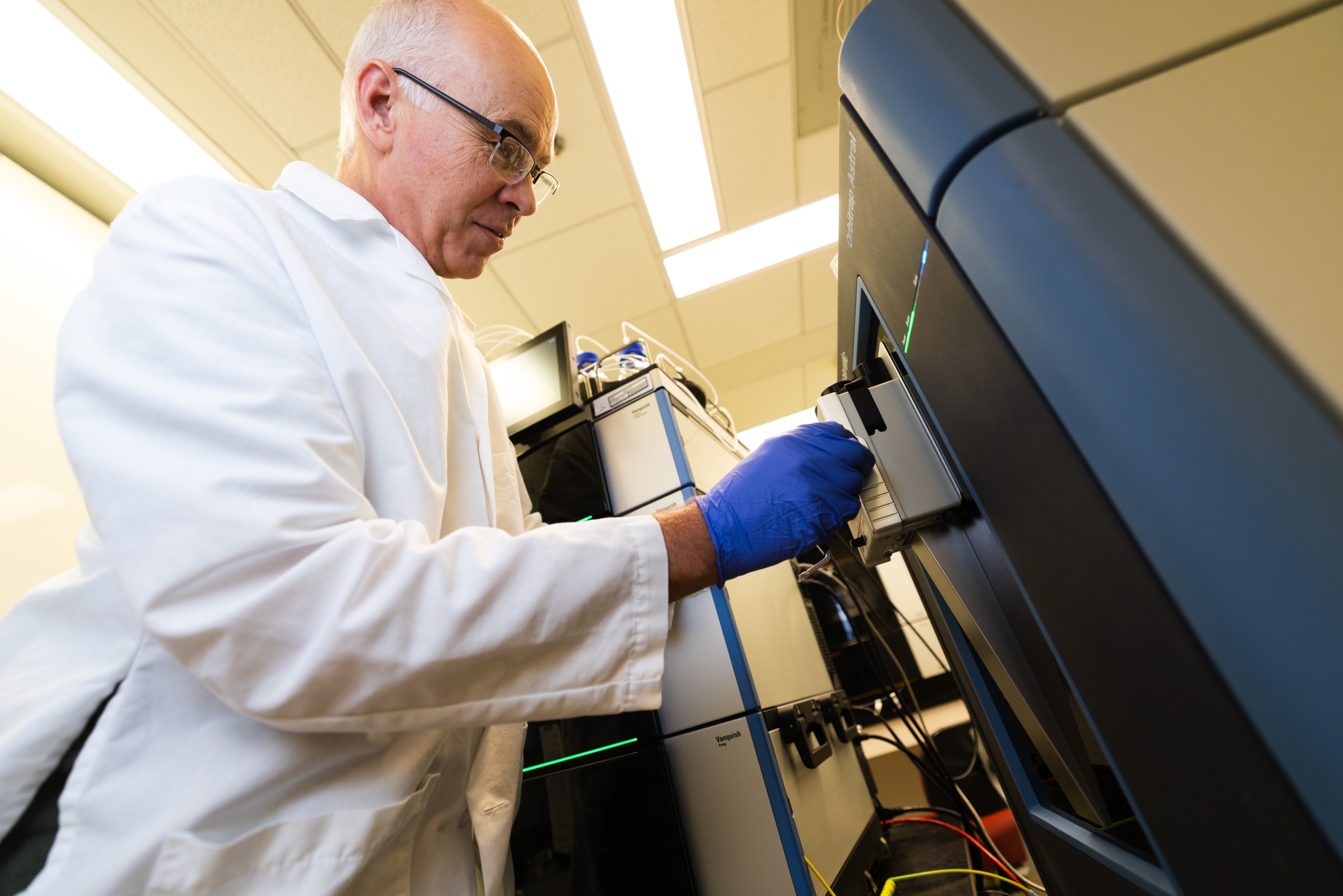
The new Thermo Scientific Orbitrap Astral mass spectrometer is a high-resolution instrument that delivers exceptional speed, depth, sensitivity and accuracy in protein identification and quantification. The new system significantly enhances the facility’s capacity to analyze proteins through liquid chromatography coupled with mass spectrometry (LC-MS), a technology widely used for protein biomarker discovery and other applications across environmental science, agriculture, food safety, animal health and biomedical research. The instrumentation began operations in June 2026.
“With this instrument, we’re now able to scan a lot faster. That means it can acquire much more data more quickly than we could before,” said Sophie Alvarez, director of the facility.
“And at the same time, because it scans so fast, we can reduce the time of the run. Typically, when we analyze a sample, it used to take one to two hours. Now we can drop that to 15 minutes to less than an hour per sample.”
Alvarez, who is also a plant biologist, said the new equipment allows the center to undertake larger-scale experiments with greater depth, reliability and faster turnaround times. For example, researchers can profile large panels of maize or sorghum accessions to uncover new links between protein expression and phenotypic variation. These insights can help identify and map important traits associated with biotic and abiotic stresses, ultimately supporting the development of more resilient crop varieties.
In addition to increased speed, the new instrument offers improved sensitivity, enabling scientists to detect proteins present at very low levels — information that may have been difficult or impossible to capture with previous-generation Orbitraps.
The Proteomics and Metabolomics Facility is a fee-for-service research resource within the Nebraska Center for Biotechnology. Alvarez said the facility serves about 120 researchers a year from UNL, other universities, government agencies and private industry.
Scientists submit biological samples to the facility, which manages every stage of the workflow, including sample preparation, instrument analysis and data interpretation. Alvarez said that she and Mike Naldrett, assistant director of the facility, bring more than 40 years of combined experience in proteomics and mass spectrometry. This expertise enables the facility to provide consultation for researchers undertaking large or technically complex projects that require customized analytical approaches or the development of new workflows. In many cases, these interactions evolve into collaborative research partnerships that strengthen grant proposals and support externally funded research projects.
The core facility specializes not only in proteomics but also in metabolomics, the analysis of small molecules that, together with proteins, provide a more complete understanding of biological and metabolic processes. Multiple dedicated LC-MS platforms are optimized for specific analytical applications to provide broad and flexible support for research projects.
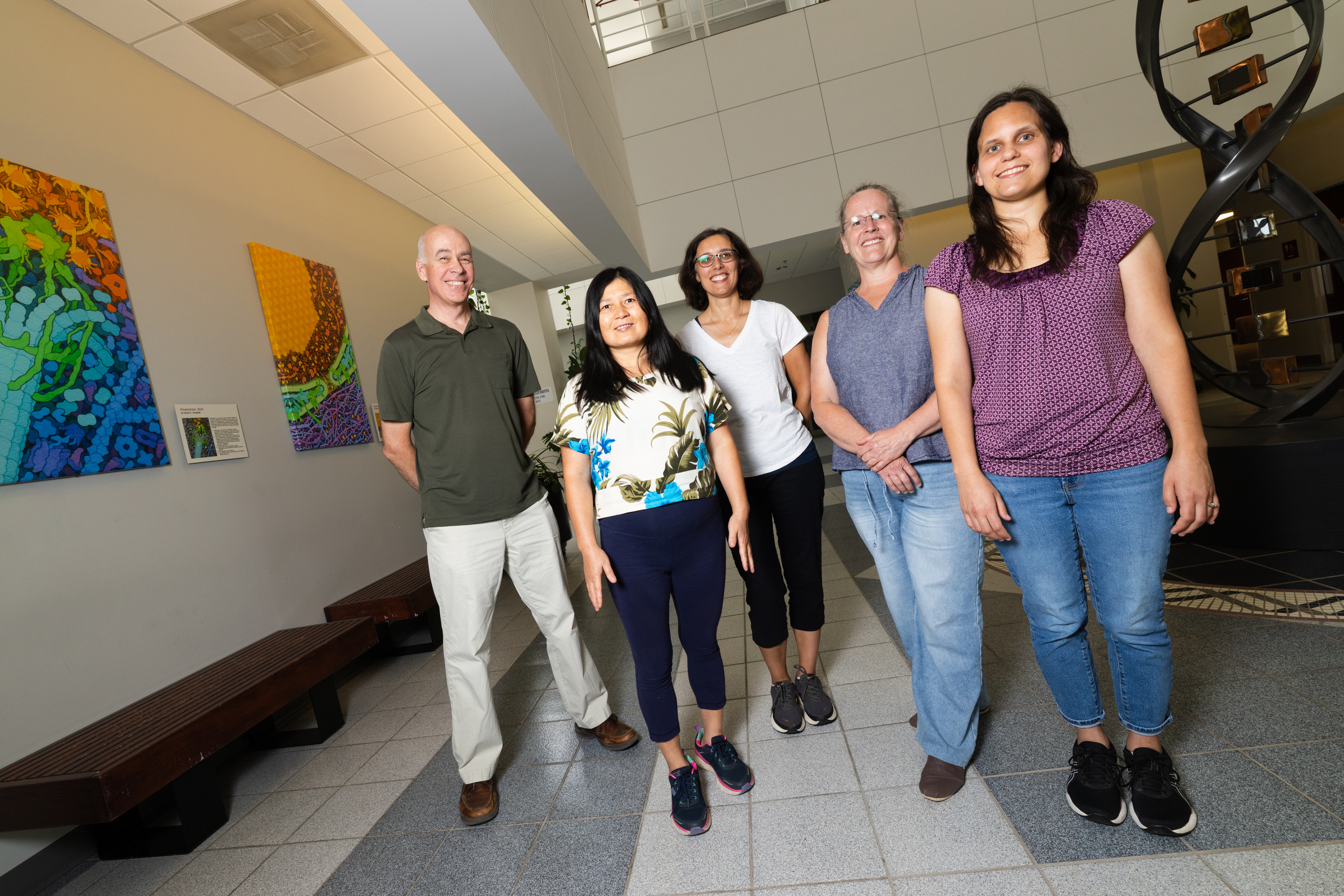
The facility was established 11 years ago and has grown into a key research resource for the university. Former Nebraska Center for Biotechnology Director Daniel Schachtmanwas instrumental in securing funding for the sophisticated instrumentation, with additional support from the Nebraska Research Initiative. Looking ahead, the new Orbitrap Astral instrument positions the facility to support increasingly complex research projects while providing scientists with faster turnaround times and higher-quality data. positions the facility to support increasingly complex research projects while providing scientists with faster turnaround times and higher-quality data.
“As research projects continue to grow in size and complexity, this technology allows us to meet those demands more efficiently,” Alvarez said. “We’re excited about the opportunities it creates for researchers at UNL and beyond.”
Center for Biotechnology Core Facilities News for Researchers Research News