Posted May 29, 2026 by Tiffany Lee
In case you missed these stories highlighting research and creative endeavors at the University of Nebraska-Lincoln, the Office of Research and Innovation’s communications team has compiled a roundup of some top research stories from research.unl.edu and other sources.
Convening spurs conversation, excitement about university’s future
Who: University of Nebraska-Lincoln research community
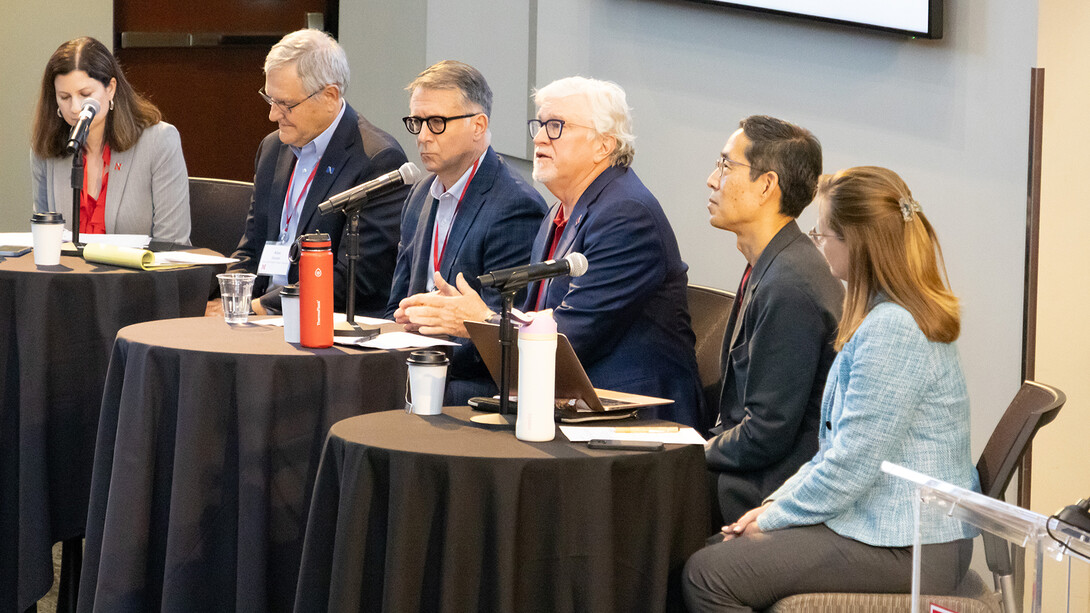
What: The Research and Innovation Convening on May 4 brought together 175 Nebraska faculty for an opportunity to foster community, connection and collaboration. The event included the perspectives of university leaders and partners; updates on ideas generated in response to the research identity framework; and exploration of interdisciplinary opportunities at the intersection of those areas and cross-cutting areas of distinction. Interim Chancellor Katherine S. Ankerson and Jen Nelson, vice chancellor for research and innovation, spoke at the event, reminding faculty about the power of collaboration and the importance of remembering the “why” stories behind their work. Speakers and panelists acknowledged the challenges in the research environment – including upheaval in federal priorities and processes and ongoing state-level budget constraints – while providing constructive advice about how Nebraska faculty can move forward, including a heightened emphasis on partnerships.
“It has become clear that UNL must anchor its research and innovation portfolio in partnerships,” Nelson said. “We should seek collaborative opportunities with government, industry, community partners, foundations, philanthropic organizations and other academic institutions.”
Writer: Dan Moser and Ashley Washburn, Office of Research and Innovation
Liu’s CAREER award to support AI-driven wireless network research, education
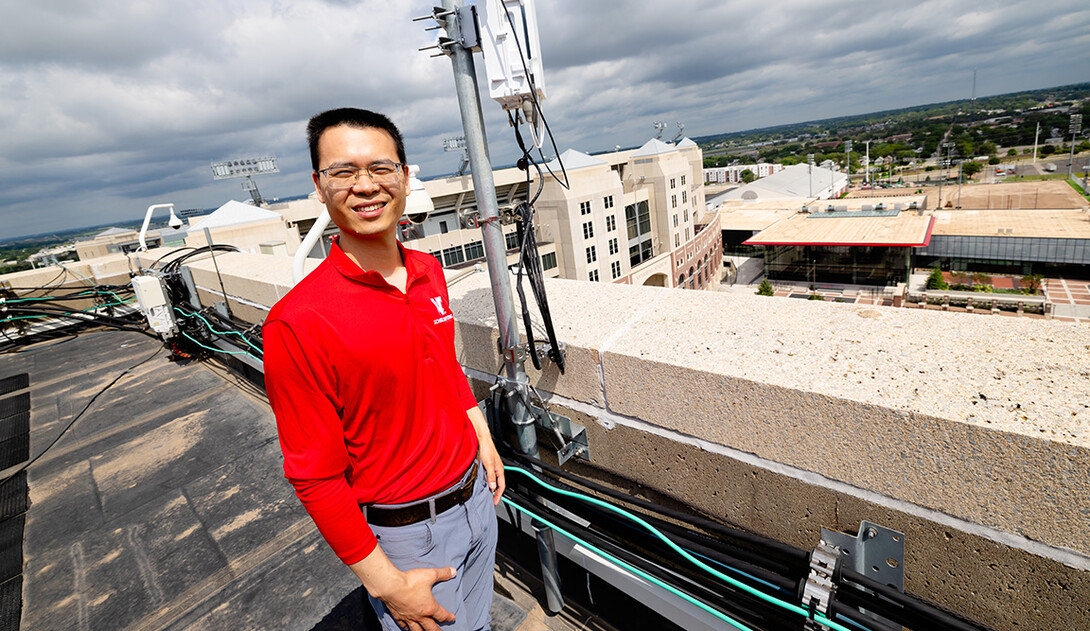
Who: Qiang Liu, assistant professor of computing
What: With a $750,000 grant from the National Science Foundation’s Faculty Early Career Development Program, Liu will advance work to develop safer and more reliable artificial intelligence-native solutions for next-generation mobile networks. The larger goal is to make AI-based technology tools more trustworthy, as the telecommunications industry remains skeptical of algorithms’ ability to adapt amid unpredictable and evolving network dynamics. Liu’s work aims to achieve “network autonomy,” which is the ability of networks to safely manage and optimize themselves in real time using AI and machine learning methods. He is also creating new opportunities for K-12 students in STEM, with a particular focus on engaging rural students who may not be able to travel to in-person events. He will launch a virtual “Hour of Code” for these students, as well as a virtual reality playground that realistically replicates live demos at Nebraska Innovation Campus. Liu will also expand research opportunities for college students, which will take advantage of Husker-Net, the university’s own private 5G network that Liu helped develop.
“We will enhance Husker-Net to better fit wireless- and edge-computing-related course needs,” Liu said. “We want to expand to students and new project users. We can facilitate outdoor scientific research on campus that involves wireless connectivity, and then their contributions will help us do better research.”
Writer: Victoria Grdina, School of Computing
Weaver earns $4M grant to target future flu pandemics
Who: Eric Weaver, biological sciences and director of the Nebraska Center for Virology
What: Weaver’s team received a $4 million National Institutes of Health grant to advance work on a broad, long-lasting influenza vaccine. The researchers will build on their prior research on the Epigraph vaccine strategy, which they showed to be superior to traditional flu vaccines for swine flu viruses. Now, Weaver’s team is focusing attention on a universal flu vaccine targeting avian influenza viruses H2, H5, H7 and H9 – an important approach, as leading public health organizations predict that an avian-origin Influenza A is the most likely culprit for a future epidemic or pandemic. The vaccine strategy will work in two ways: Recognizing changes in the virus’s outer structure and targeting genetic material that is more stable across multiple viruses. The first approach is based on the computational analysis of the genetic codes of thousands of influenza virus strains, which helps identify the most common viral targets, or epitopes, capable of triggering immune protection. The second function targets the stable genetic material found in the virus’s hemagglutinin protein stem.
“The real primary goal is to make sure that we have vaccines in hand in case there is a pandemic or the indication of one,” Weaver said.
Writer: Deann Gayman, University Communication and Marketing
Husker engineers tackle water systems fouling
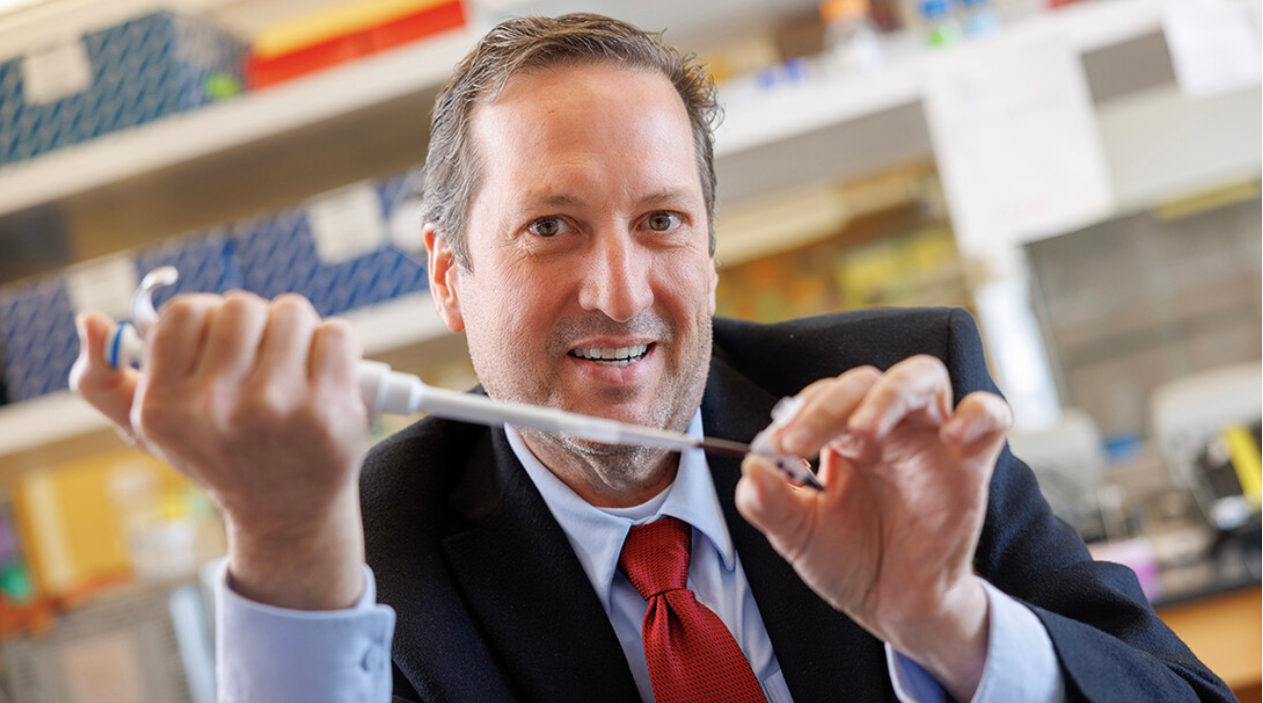
Who: Siamak Nejati, associate professor of chemical and biomolecular engineering; Bruce Dvorak, Ray Fauss Professor of Civil and Environmental Engineering; Mona Bavarian, associate professor of chemical and biomolecular engineering
What: The Husker team, led by Nejati, received a $1.5 million grant from the National Science Foundation and the Established Program to Stimulate Competitive Research to tackle one of the most persistent challenges in clean water systems: the buildup of unwanted materials on solid surfaces. Currently, the cornerstone of this technology is membrane filtration: membranes act as semi-permeable barriers, allowing water to pass through while rejecting contaminants. But over time, materials – collectively known as foulant – accumulate on membrane surfaces. This creates operational costs in two ways: replacement of fouled membranes and disposal of the collected waste. To solve these problems, the team is developing an artificial intelligence-based model that minimizes buildup and transforms the foulant into useful byproducts that help power Nebraska’s economy. Bavarian’s laboratory will lead efforts to harness AI, particularly digital twins, for models that can predict how fouling will change over time and how membranes can stay ahead of this evolution. Dvorak will focus on the economics, exploring the market value of potential byproducts and how farms, producers and companies could participate in a circular system that reuses waste materials.
“We think there may be opportunities to turn those leftover materials into something more useful – like ammonia, hydrogen peroxide or other products that can create an economic driver by keeping more of our agricultural dollars in Nebraska,” Nejati said.
Writer: Karl Vogel, College of Engineering
Program expands emotional regulation support for autistic students
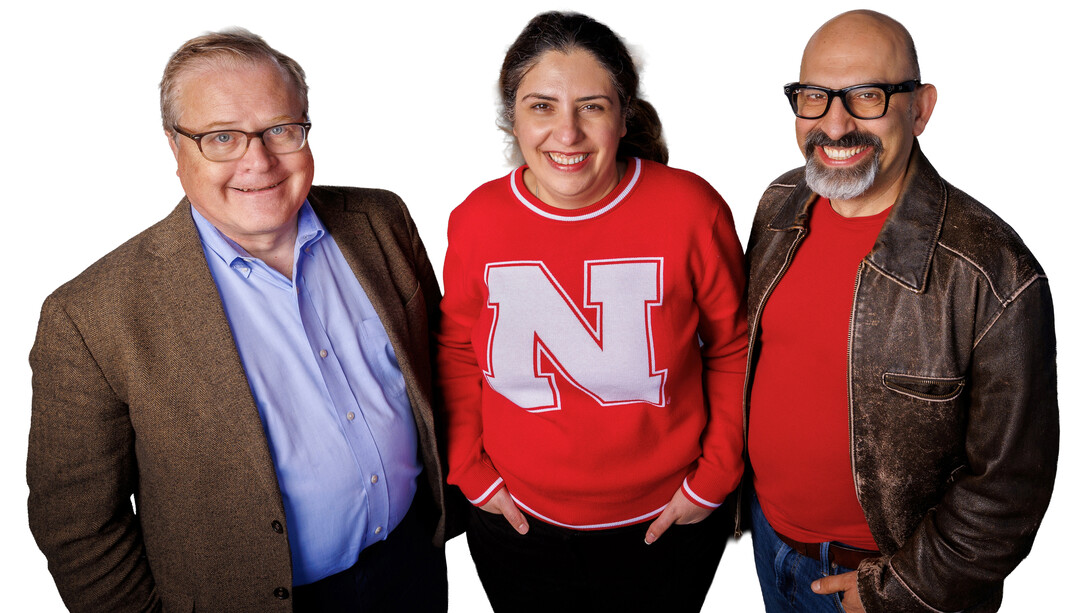
Who: Sungeun Kang, assistant professor of school psychology and research affiliate with the Nebraska Center for Research on Children, Youth, Families and Schools
What: Using a Layman Award from the Office of Research and Innovation, Kang led a project to refine and expand an intervention program designed to support regulation among autistic children. Many children with autism spectrum disorder struggle with irritability and behavior challenges stemming from emotional dysregulation – the inability to manage emotional responses. These difficulties are associated with longer-term problems, like increased hospitalization and unsuccessful transitions to college and employment. To help children improve their emotional regulation skills, Kang’s project explored adapting an evidence-based group intervention, called Regulating Together, to the school setting. Fifteen school-based professionals participated in Zoom focus groups to review the revised program and discuss ways to enhance its engagement, feasibility and usability in schools. Participants emphasized the need for flexible sessions that align with natural breaks in the school day, more concrete examples and adaptable materials. They also recommended the use of videos and other visual supports, as well as hands-on activities.
“Our goal is to make the program more user-friendly, reduce the workload for educators, and create a more engaging experience for autistic students as they learn emotion regulation strategies,” Kang said.
Writer: Chuck Green, Kindred Media
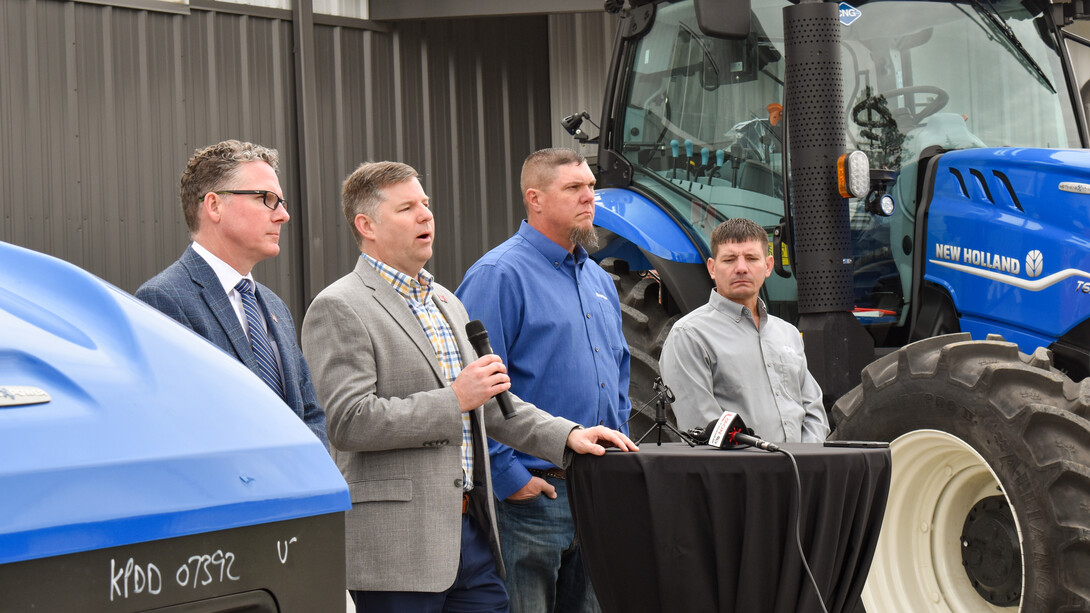
Methane-powered tractors will bolster ag research at Nebraska U
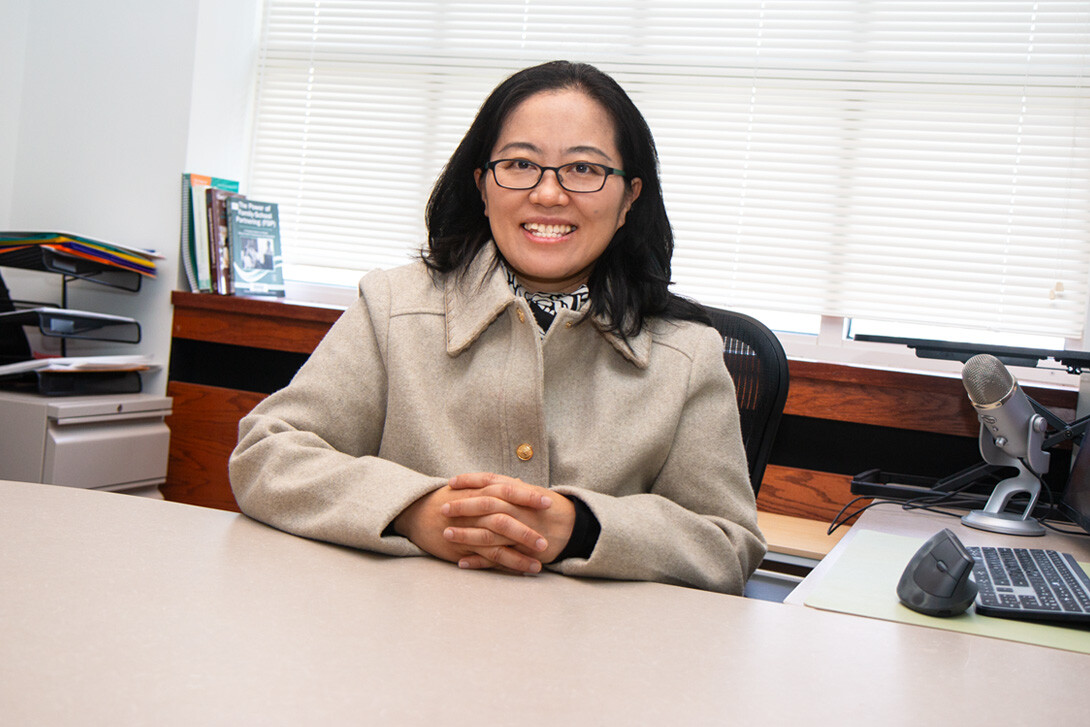
Who: CNH, an equipment and services company that sustainably advances the work of agriculture and construction workers; Andy Dozler, manufacturing engineering manager of the CNH plant in Grand Island, Nebraska; Doug Zalesky, director of the Eastern Nebraska Research, Extension and Education Center; University of Nebraska Foundation
What: Through the NU Foundation, CNH donated two methane-powered tractors to the university’s Institute of Agriculture and Natural Resources, offering faculty and students new agriculture research and education opportunities. The tractors are the New Holland T6.180 model, which have a retail value of $287,240 and are the world’s first 100% methane-powered production tractor. Dozler, who serves on the Biological Systems Engineering advisory board, facilitated the gift, in part to demonstrate the viability of alternative-powered machinery in everyday agricultural operations. The tractors will be used at ENREEC, a research and education facility near Mead. They are designed to minimize emissions while maximizing profitability and productivity on farms. On properties with biodigesters, farmers can power the tractors by converting the operation’s plant waste and livestock manure into biomethane. They can also operate on compressed natural gas, which is how they will be fueled initially at the university. The gift was made as part of Only in Nebraska: A Campaign for Our University’s Future.
“This donation is an incredible addition to the slate of technologies here at ENREEC, and it highlights the strong partnership we’re grateful to share with CNH. We’re extremely thankful to CNH for the donation of these tractors, and we look forward to putting them to work,” Zalesky said.
Writer: University Communication and Marketing