Posted February 27, 2026 by Tiffany Lee
In case you missed these stories highlighting research and creative endeavors at the University of Nebraska-Lincoln, the Office of Research and Innovation’s communications team has compiled a roundup of some top research stories from research.unl.edu and other sources.

Ramamurthy pursuing advanced speed, intelligence, efficiency of data networks
Who: Byrav Ramamurthy, professor of computing
What: With funding from the National Science Foundation and the U.S. Department of Energy, Ramamurthy is leading three projects aimed at advancing the speed, intelligence and efficiency of data networks – work at the nexus of artificial intelligence and next-generation connectivity. The work centers around a central challenge: managing and analyzing the massive volumes of data that flow through modern scientific and digital infrastructure. One NSF-funded project applies AI to Internet2 routing data to classify traffic and detect anomalies in large networks; the other explores new technologies to make fiber-optic systems faster, energy efficient and cost effective. The DOE project uses machine learning to catalyze caching logs from the Open Science Grid, which distributes data from the Large Hadron Collider. Findings from the three projects will support the enhancement of the high-speed networks that are critical for AI advancement.
“AI is a good tool,” Ramamurthy said. “Sometimes people have apprehension about the role of AI, and I do have some concerns myself, but there are some things, especially large data, big data, for which there’s no other way. Humans cannot analyze the large traffic data from routers.”
Writer: Dan Moser, Office of Research and Innovation
Khalimonchuk continues research into mitochondria’s role in diseases
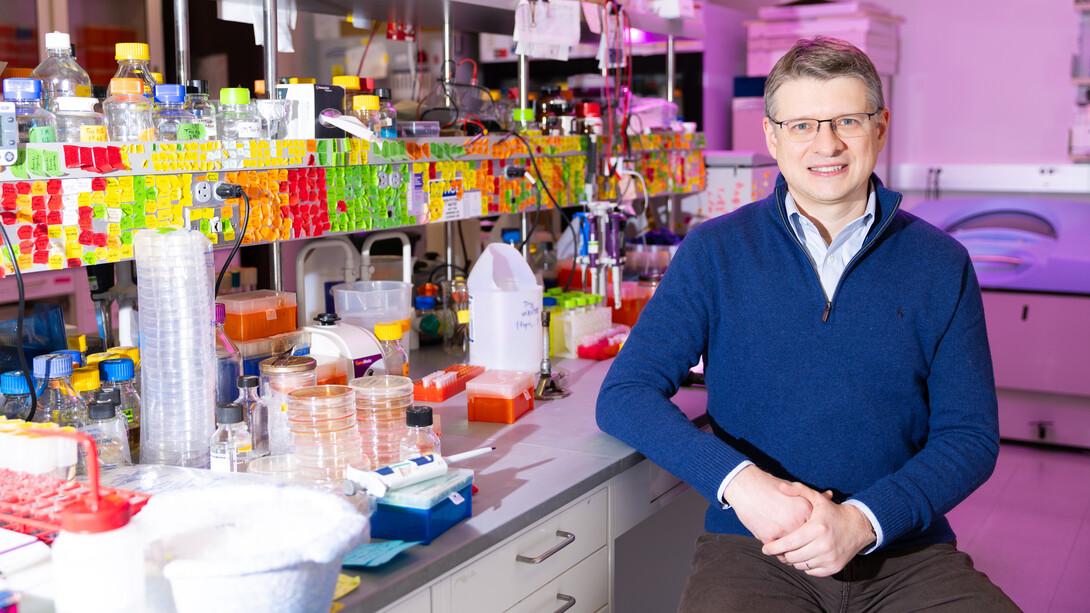
Who: Oleh Khalimonchuk, Willa Cather Professor of biochemistry
What: Khalimonchuk received a five-year, $2 million renewal of his Maximizing Investigators’ Research Award from the National Institutes of Health, which supports his work on mitochondrial quality-control systems. Long known as cells’ “powerhouses,” mitochondria also play critical roles in immune signaling, stress responses and cell health. Though mitochondrial failure is linked to more than 150 human diseases, including Lou Gehrig’s, Parkinson’s and Alzheimer’s, researchers don’t fully understand the molecular bases of mitochondrial defects. Using advanced techniques and tools, including Nebraska’s CryoEM Core Facility, Khalimonchuk will paint a clearer picture of the systems governing mitochondrial health and stability. He’ll continue his longstanding exploration of OMA1, a protein that responds to mitochondrial stress and helps cells adapt. He’ll also study architectural changes to the inner mitochondrial membrane, age-related changes in mitochondria and mitochondrial heme.
“This is all a heavily interconnected system,” Khalimonchuk said. “For that reason, it’s really important to understand all the pieces of the jigsaw puzzle that we have. We’re still missing quite a few, but it’s actually coming together quite nicely.”
Writer: Tiffany Lee, Office of Research and Innovation
Who: Jeffrey P. Gold, president of the University of Nebraska system; Santosh Pitla, professor of biological systems engineering; Adrian Wisnicki, professor of English
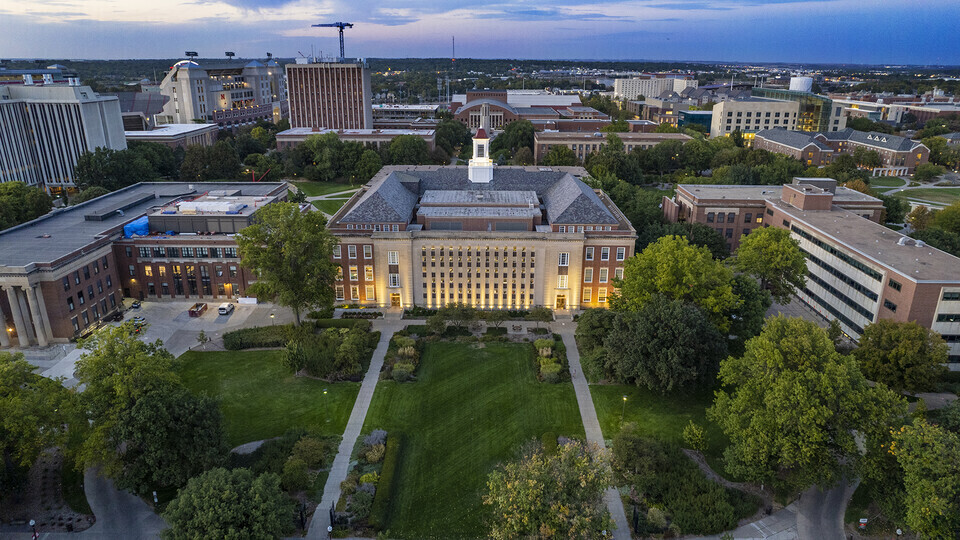
What: The University of Nebraska has launched the Artificial Intelligence Institute, a systemwide initiative that positions Nebraska as a national leader in shaping the future of responsible, human-centered artificial intelligence. Gold said the institute reflects NU’s commitment to transformative innovation and the pursuit of extraordinary impact. The institute will harness emerging technologies to serve society, grow the economy and support future generations through education, interdisciplinary research, teaching, workforce development and public engagement. Its work will touch a diverse range of sectors, including health care, agriculture, rural and urban development, and business and national security. UNL is home to the institute’s co-directors: Pitla, an internationally recognized expert in AI-enabled agricultural robotics, and Wisnicki, a digital humanities and literature scholar.
“My goal is to help build collaborative environments where AI research, education and engagement reinforce one another to create meaningful impact for society. It’s not just about technology. It’s about people, partnerships and purpose. By connecting disciplines and communities, we can ensure AI serves as a tool for innovation, learning and public good,” Pitla said.
Writer: Arianna Elnes, Daugherty Water for Food Global Institute at the University of Nebraska
New research shows God-believing ‘nones’ align closely with religious Americans
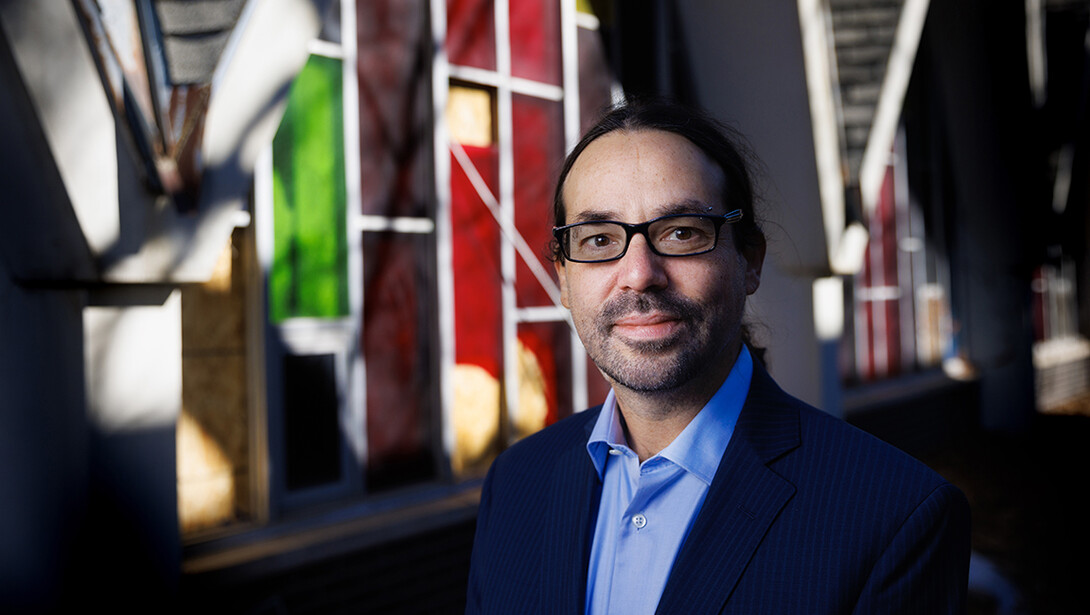
Who: Philip Schwadel, Happold Professor of sociology
What: Nearly one in three Americans now identify as religious “nones,” meaning they consider themselves atheist, agnostic or nothing in particular. This group has grown from approximately 16% of the population in 2007 to 28%, according to the most recent data from the Pew Research Center. Schwadel recently published a study that sheds light on the ideological views of nones. One finding is that religious nones who believe in God are far more likely than other nones to have policy preferences that align with their religiously affiliated counterparts. Using data from the national General Social Survey, Schwadel examined 16 categories ranging from attitudes on capital punishment to government spending and political intolerance. God-believing nones are more likely to support school prayer, the death penalty and making pornography illegal, while opposing abortion. They are less likely than other nones to support increased spending on welfare, scientific research, education or environmental protections. This conservatism could have political implications.
“I think there’s a clear implication for Republican politicians,” Schwadel said. “I do think that they can appeal to some of these nones who believe in God or even believe in a higher power, whose policy perspectives align with the Republican Party, if they tone down a little bit of the Christian-specific language.”
Writer: Deann Gayman, University Communication and Marketing

Research shows companies can gain advantage by prioritizing customer privacy
Who: Natalie Chisam, assistant professor of marketing
What: Chisam recently published a study in the Journal of Marketing showing that companies that handle customer data with transparency, care and clear communication can gain a measurable competitive advantage through an approach called privacy stewardship. Though companies often see customer privacy as an obstacle that limits data use and personalization, Chisam’s work shows that customers reward brands that manage data privacy responsibly and demonstrate a meaningful commitment to data protection and customer care. That pattern may be less evident in certain industries: For example, customers may perceive social media platforms’ commitment to privacy to be less sincere since the businesses are so reliant on monetizing personal data. And in highly regulated sectors, like health care and finance, privacy stewardship is less important because customers already expect strong protections. The study offers actionable guidance for companies seeking to launch privacy initiatives that align with brand reputation and risk exposure.
“Privacy stewardship is most powerful when customers believe it’s authentic and when they need it the most,” Chisam said. “It’s not just about legal compliance. It’s about building trust and turning privacy into a competitive edge.”
Writer: Sheri Irwin-Gish, College of Business
Researchers explore ways to identify, enhance resilience among youth
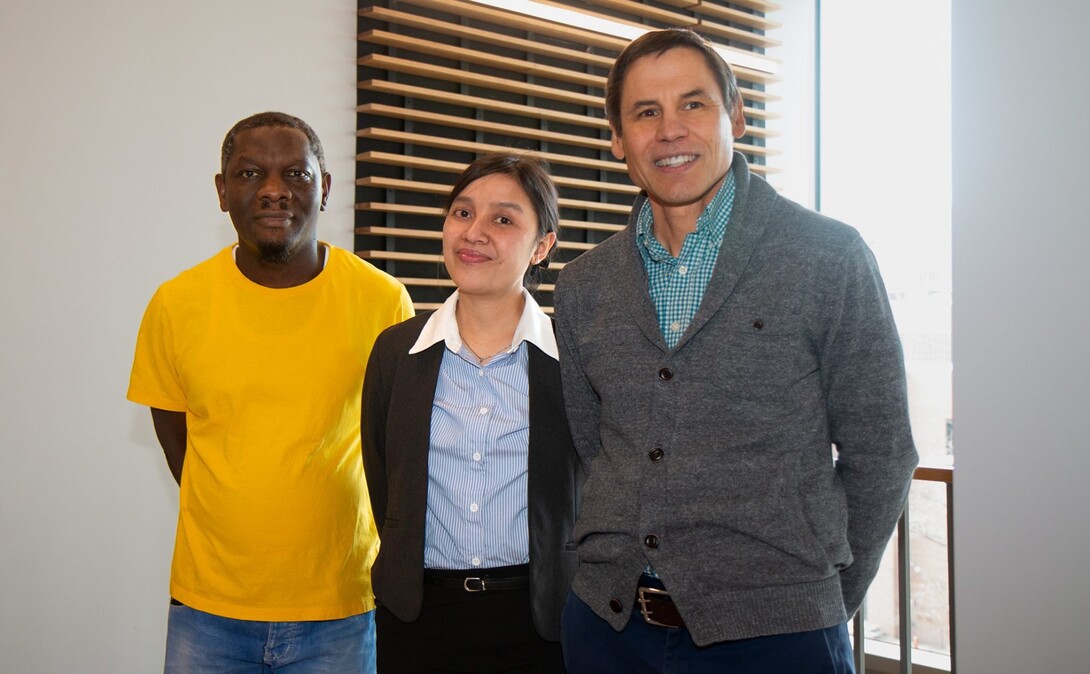
Who: Alex Mason, professor of child, youth and family studies and in the Nebraska Center for Research on Children, Youth, Families and Schools; Kristin Duppong Hurley and Patrick Tyler, Family Translational Research Center at Boys Town National Research Hospital
What: Nearly 25,000 American youth live in residential care, and as many as three-quarters have endured significant trauma – including maltreatment, poverty and, for many, systemic racism and discrimination. Though these experiences are linked to mental and behavioral health problems, some youth in residential care with trauma display remarkable resilience, adapting and functioning well despite the adversity. Mason’s team is conducting research to better understand the nature of resilience – the dynamic process of adjusting successfully to stress and adversity – and which characteristics matter the most for vulnerable youth in residential care. They are analyzing clinical data collected since 2022 on about 900 youth who resided in the Boys Town Family Home Program, pinpointing the traits among youth that can inform targeted resources and intervention strategies. The findings will enable youth in residential care to receive unique supports to achieve positive life outcomes.
“We want to make a deep dive into resilience and tailor the care at Boys Town – and ultimately, at other facilities – to youths’ strengths and help them work on other areas that aren’t as strong,” Mason said. “We need a richer picture of the concept of resilience in kids.”
Writer: Chuck Green, Nebraska Center for Research on Children, Youth, Families and Schools

Nebraska scientists establish biochar on-farm research network
Who: Guillermo Balboa, research assistant professor of agronomy and horticulture; Michael Kaiser, associate professor of agronomy and horticulture and Daugherty Water for Food Global Institute faculty fellow
What: Balboa and Kaiser are partnering with the American Farmland Trust and four Nebraska farmers on a biochar on-farm research network that is among the first and largest in the United States. When added to agricultural soil, biochar – produced by pyrolyzing or combusting organic waste biomass at high temperatures under low-oxygen conditions – shows promise in building healthy soils and promoting long-term, input-efficient agroecosystems. Field observations reflect biochar’s significant, long-lasting positive effects on soil carbon and water storage, but its impact on soil nitrogen retention to improve nutrient-use efficiency in row-crop systems is less clear. To fill this gap, the research team will use the Nebraska network to collect scalable field data from different soils under varying water and nitrogen management strategies.
“The research network will provide information for the farming community on which site conditions and nitrogen management will provide the largest biochar benefits for more efficient use of this critical resource,” Balboa said. “Biochar may help lower the amount of nitrogen fertilizer needed without compromising on the yield.”
Writer: Fran tenBensel Benne, Department of Agronomy and Horticulture
Jagodinsky earns NEH grant to reveal untold history of habeas corpus
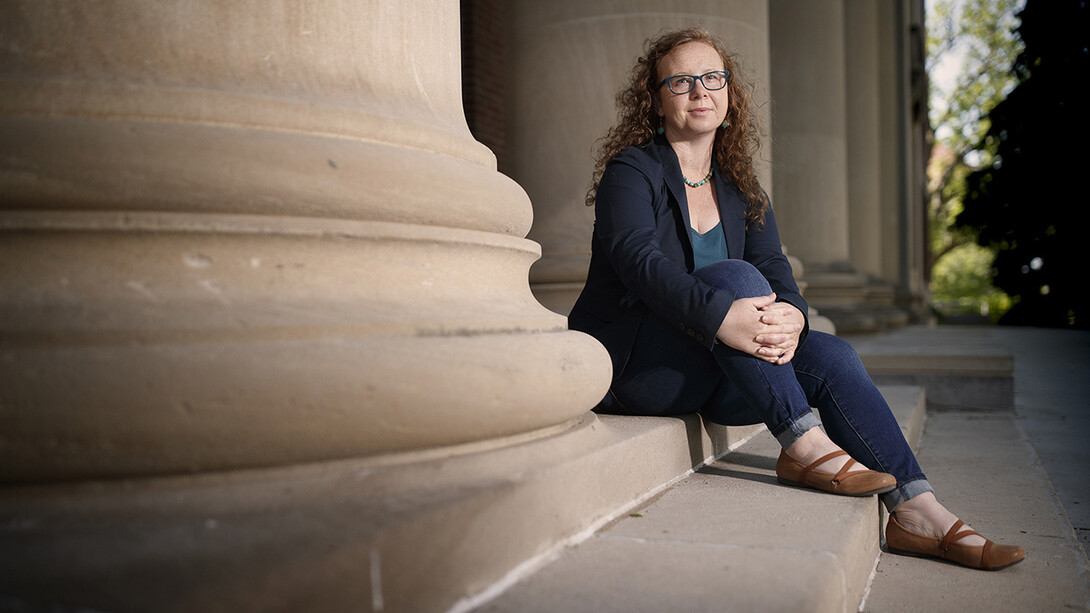
Who: Katrina Jagodinsky, associate professor of history
What: Jagodinsky recently earned a grant from the National Endowment for the Humanities to write a book focused on how ordinary people across the American West used habeas corpus to challenge confinement and injustice. The book builds on her expansive digital humanities project, “Petitioning for Freedom: Habeas Corpus in the American West, 1812-1924,” which is an online searchable database containing analysis and primary documents for more than 2,000 cases in eight states. The book will explore the myriad ways that habeas corpus – a tool originally enabling prisoners to challenge the legality of their detention – came to be used by people seeking freedom from enslavement, deportation, institutionalization and even marriage. Jagodinsky hopes the book will encourage more scholars to explore the database.
“I hope to offer into the contemporary conversation a sense that American legal history is not built on binaries of free and unfree, citizen and non-citizen, franchised or disfranchised. The American legal tradition has all of those people in it from the founding forward,” she said.
Writer: Deann Gayman, University Communication and Marketing