Posted September 4, 2026 by Tiffany Lee
In case you missed these stories highlighting research and creative endeavors at the University of Nebraska-Lincoln, the Office of Research and Innovation’s communications team has compiled a roundup of some top research stories from research.unl.edu and other sources.
Ties between Canadian startup, Nebraska U lead to new tech facility in Seward
Who: Santosh Pitla, professor of biological systems engineering; PTx Trimble
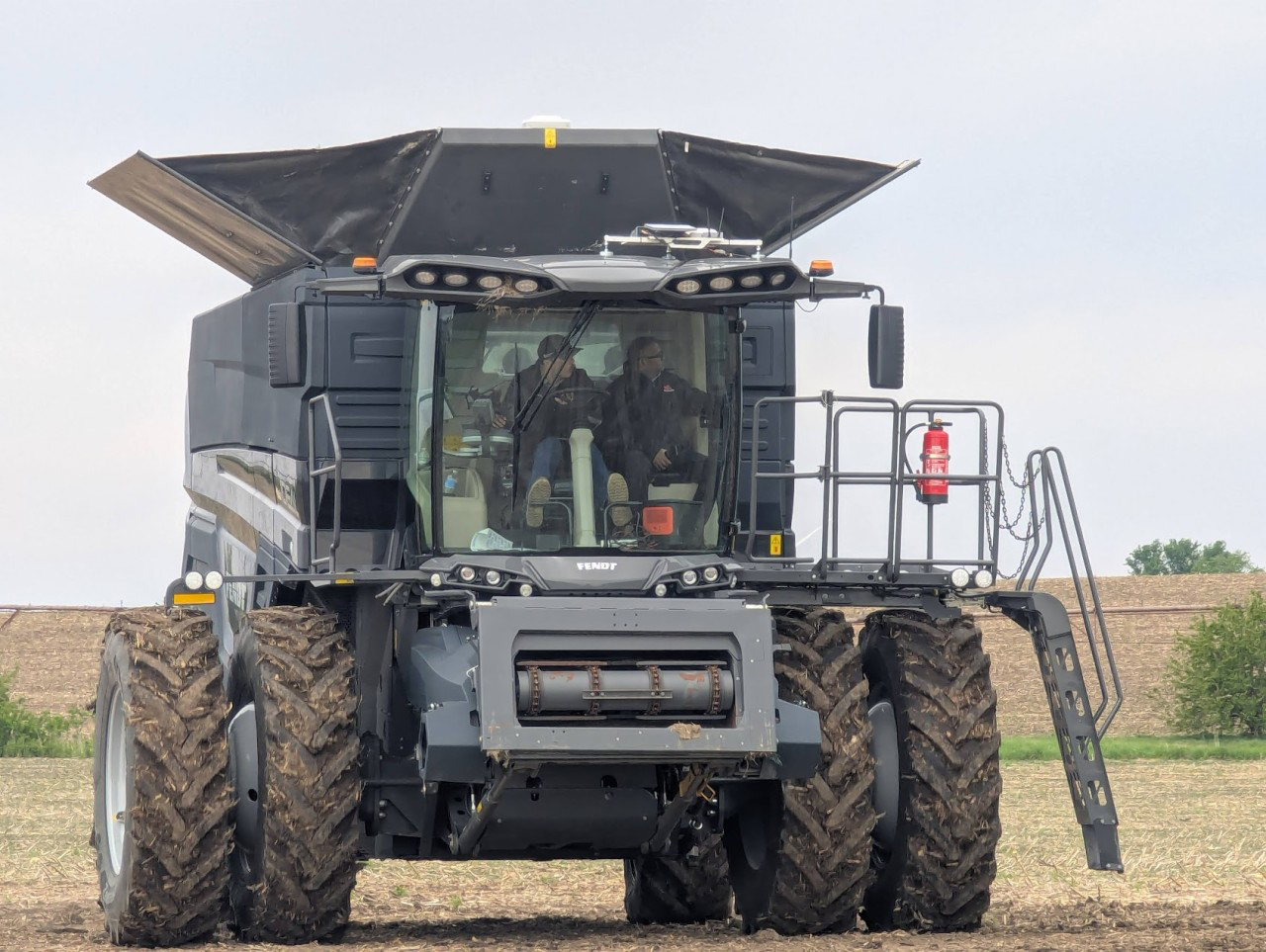
What: A longtime partnership between PTx Trimble, a precision agriculture company, and the university reached a new milestone in the spring when PTx celebrated the grand opening of a new engineering facility in Seward. The partnership started nearly a decade ago when the company – then known as JCA Technologies, based in Winnipeg – was searching for a university partner in the Midwest. The Lincoln Partnership for Economic Development helped connect PTx and UNL, which marked the beginning of a relationship focused on autonomous technologies for tractors, tillage equipment and other agricultural machinery. The new Seward facility is staffed largely by Husker alumni and researchers who are advancing PTx’s OutRun system, a self-contained, retrofit autonomy kit that transforms existing tractors into driverless machines. Combine operators or farm managers can plan and control tractors’ paths, staging and unloading zones using an iPad interface via Starlink technology that is reliable even in rural, low-coverage farming zones. Pitla said he is proud to see students lead the way in developing the technology.
“This reinforces the importance of applied research that directly impacts industry and society,” he said. “When research, education and industry partnerships come together, students gain the opportunity to work on real-world challenges and eventually become leaders driving innovation forward.”
Writer: Dan Moser, Office of Research and Innovation
Nama advances software to expand ultrasound’s role in medicine
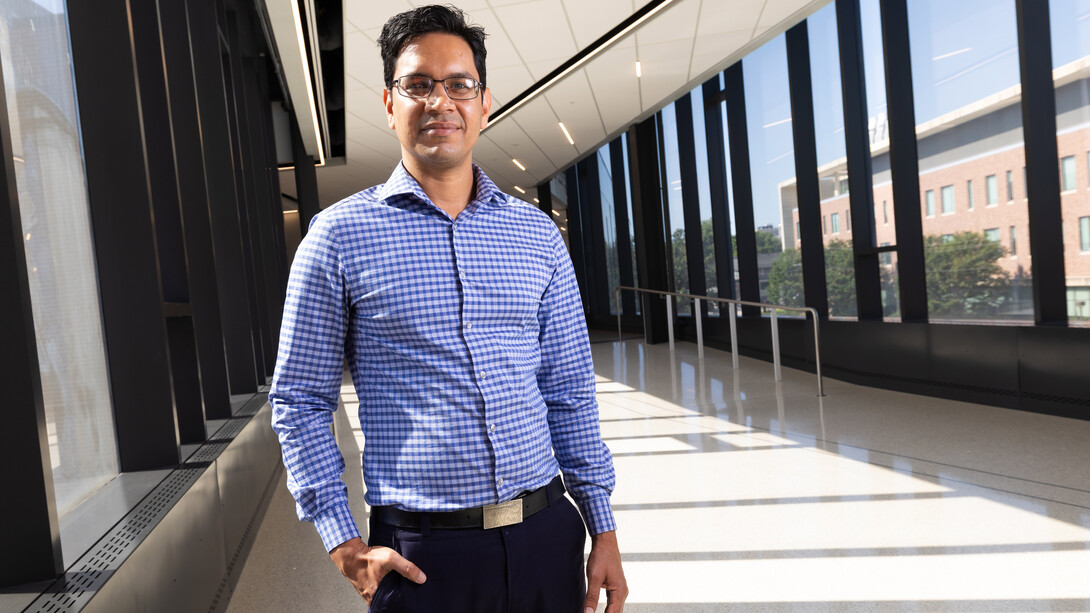
Who: Nitesh Nama, assistant professor of mechanical and materials engineering
What: Nama received a nearly $550,000 grant from the National Science Foundation’s Faculty Early Career Development Program to investigate how complex fluids inside the human body behave under the influence of sound waves. He will develop open-source computational software that accurately captures how biological fluids respond to ultrasound, which will help researchers design the next frontier of sound wave-based technologies for drug delivery, blood clot dissolution, surgeries that spare healthy tissue and beyond. Nama’s software would be one of the first platforms offering the scientific community a rapid, low-cost pathway for generating and testing hypotheses and improving medical devices. To this point, researchers studying ultrasound have relied on experiments and equations using regular fluids, like water or diluted polymers. But this doesn’t accurately represent the behavior of bodily fluids like blood, mucus or the synovial fluids that fill joint spaces. Adding further complication is the cost and complexity of working with the microchannel devices that mimic the body’s tiny structures – a process that requires clean room facilities and thousands of dollars. Computational models offer inexpensive avenues for experimentation.
“The goal is to have the testing done on the computer, rather than having to make microchannel devices again and again,” Nama said.
Writer: Tiffany Lee, Office of Research and Innovation
UNL researchers continue to uncover prehistoric discoveries at Ashfall Fossil Beds
Who: Sam Matson, superintendent of Ashfall Fossil Beds State Historical Park
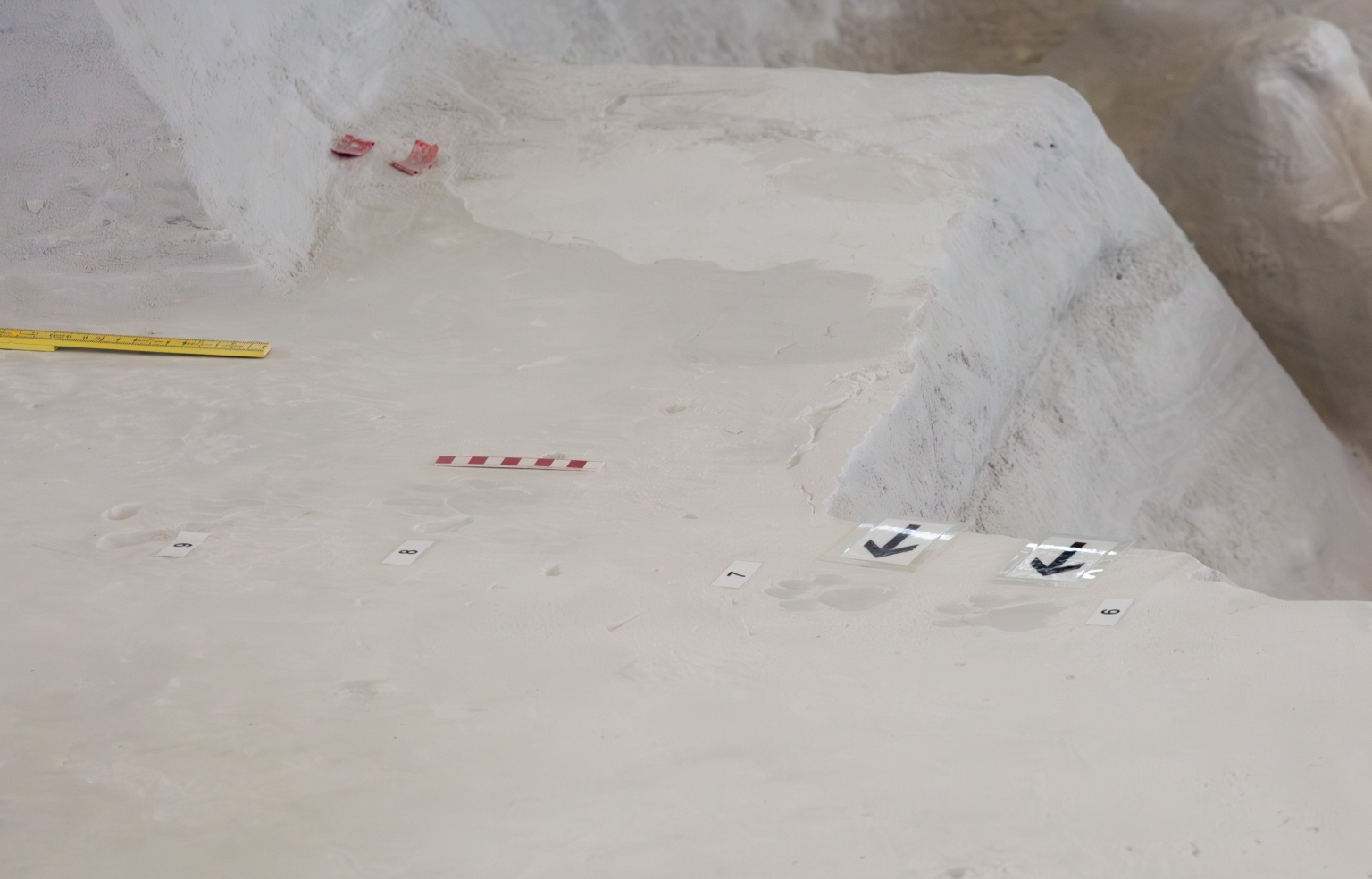
What: This year marks the 35th anniversary of Ashfall Fossil Beds, part of the University of Nebraska State Museum. The site, housed within 360 acres of Nebraska prairie near Royal, is believed to be the result of an enormous volcanic eruption that occurred 12 million years ago in what is now southwestern Idaho. Ash from the eruption is still intact across much of northern Nebraska, about a foot thick in most places – but 8 to 10 feet thick at the Ashfall site. Research indicates the site was a watering hole that served as a source of drinking water and as a bathing spot for local animals. The location continues to offer important glimpses of prehistoric life in Nebraska. In recent years, researchers have found the footprints of bone-crushing dogs, or Borophaginae, amid the ash, as well as tooth marks that seem to match the dogs’ teeth in the bones of rhinos, horses and camels that died in the ash. But they have yet to find skeletal remains, suggesting that these carnivores enjoyed meals at the watering hole but departed before succumbing to the ash. The research is ongoing: Each year, Ashfall is staffed by student interns who excavate the ash. Researchers are also digitizing the fossil record with 3D scanning technology and planning outreach opportunities focused on interacting physical, chemical and biological processes.
Writer: Dan Moser, Office of Research and Innovation
Research wins, Arthropodium success propel CAREMI forward
Who: CAREMI, the Community for Arthropod Research, Education, and Materials Innovation; Eileen Hebets, George Holmes Professor of biological sciences; Angie Pannier, Swarts Family Chair of Biological Systems Engineering and professor of biomedical engineering; Nicole Sexton, assistant professor of biological sciences; Jillian Kurovski, graduate student in biological sciences
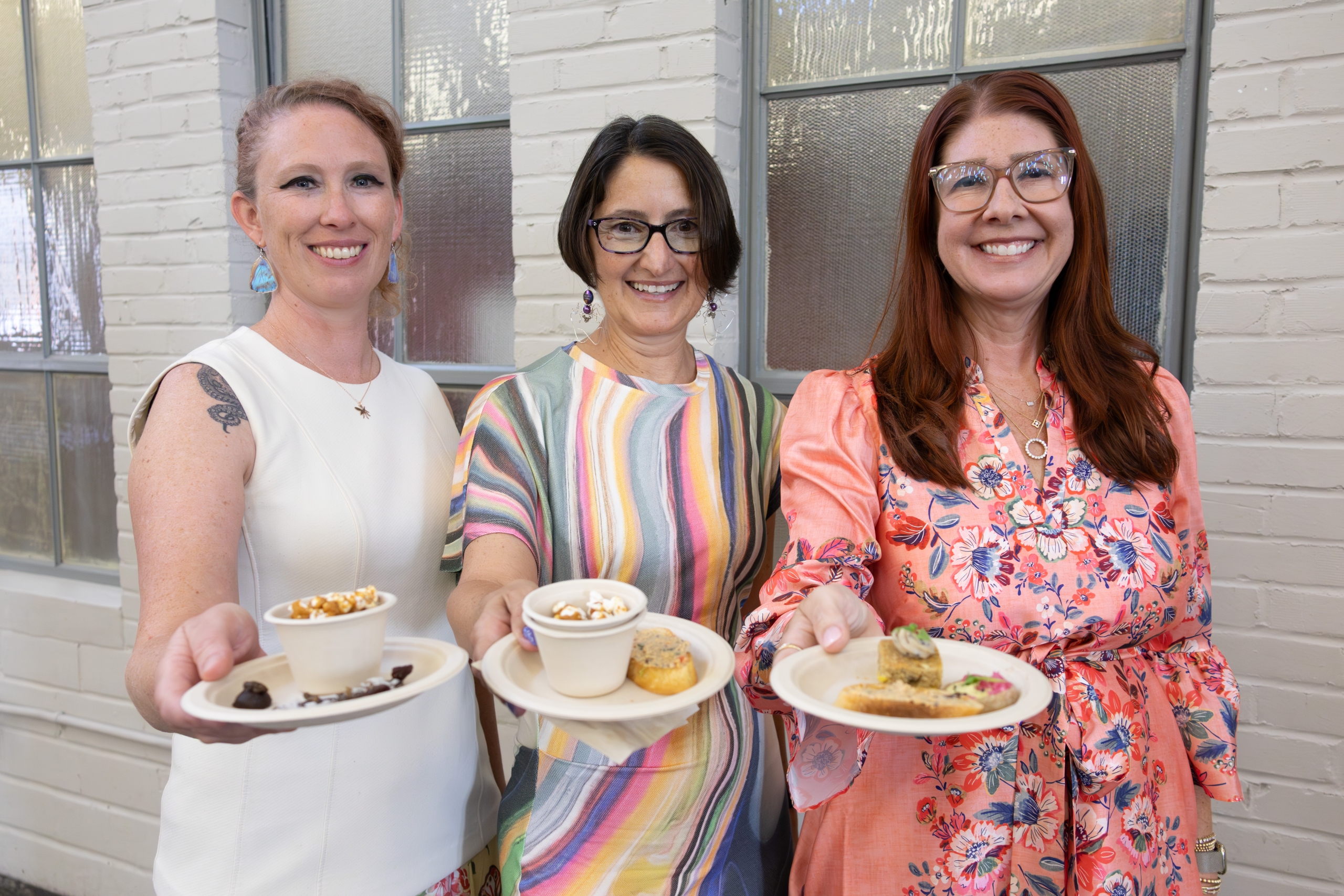
What: With a third successful Arthropodium symposium under its belt and an increasing number of research wins, UNL’s CAREMI collaboration continues to gain momentum. Launched in 2024 with a Grand Challenges Planning Grant from the Office of Research and Innovation, CAREMI’s vision is that arthropods – a vast group of animals that includes insects, spiders and crabs – could serve as a unifying focal point for interdisciplinary research in medicine, agriculture, materials science and more. Earlier this year, Hebets, Pannier, Sexton and Kurovski published a paper in the journal Insects that makes a case for harnessing arthropods’ resilience and diversity as a source of inspiration for transdisciplinary research. Other CAREMI projects are also progressing, evidenced by a growing body of preliminary data, publications, grant proposals and student research projects. The group also recently hosted its third annual Arthropodium, which bridged scholarship, culture and the arts. Guests included behavioral biologist Marlene Zuk, who spoke about insects’ ability to trigger wonder and curiosity; chef Joseph Yoon of Brooklyn Bugs, who spoke about edible insects and served them at a Bugeater canapé party; and artist Jennifer Angus, who opened an insect-focused exhibit at the Great Plains Art Museum.
“The original funding opportunity that helped catalyze CAREMI ultimately disappeared, but the community did not; instead, it grew,” Hebets said. “People kept talking, collaborating, sharing ideas and creating new things together. To me, that is one of our biggest successes.”
Writer: Tiffany Lee, Office of Research and Innovation
Coaching model strengthens support for Nebraska’s early childhood interventionists
Who: Lisa Knoche, director of the Nebraska Academy for Early Childhood Research and interim director of the Nebraska Center for Research on Children, Youth, Families and Schools; Sue Bainter, early intervention trainer and coach; Sommer Fousek, project manager with the academy; Gwen Nugent, research professor emeritus; and Rachel Schachter, associate professor of educational psychology at the University of Illinois Chicago
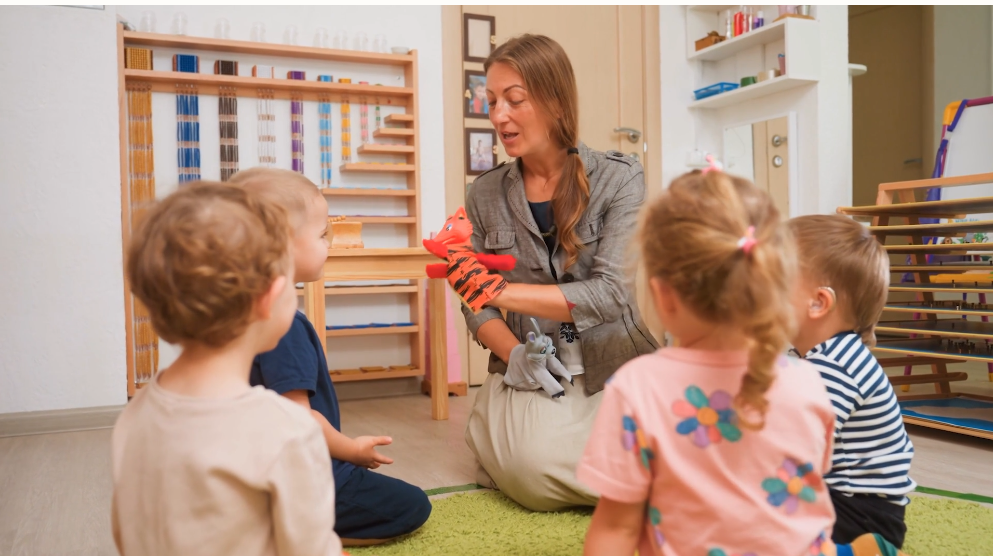
What: With support from a $1.6 million U.S. Department of Education grant, Knoche led a multi-agency collaboration in creating the Coaching in Early Intervention program, an evidence-based coaching model that promotes ongoing, high-quality services for children with disabilities and their families. The goal of the project, which launched in 2020, was to improve Nebraska’s early intervention programming by supporting the interventionists and the site-based coaches who guide them. Knoche’s team has partnered with the Nebraska Department of Education, Nebraska Department of Health and Human Services, and Nebraska Early Development Network to develop the coaching model, which has reached five state-level coaches, 20 local coaches, 49 early intervention professionals and 93 children/families from across the state. In addition to developing the coaching infrastructure, the research team also developed a training website containing resources, videos and other training material for coaches. The program’s success could improve long-term outcomes for children with disabilities and sets the stage for expansion to other states.
“We have seen interest in this as we’ve presented on it at national conferences and have had conversations with other states about the work that we’re doing,” Knoche said. “It is designed to take what we know and move it to scale within a community-building infrastructure.”
Writer: Chuck Green, Kindred Media
NIMBUS Lab selected for Air Force-funded drone research
Who: NIMBUS Lab at UNL; Brittany Duncan, Ross McCollum Associate Professor of computing; Reach Power, a California-based company developing wireless power-beaming technology
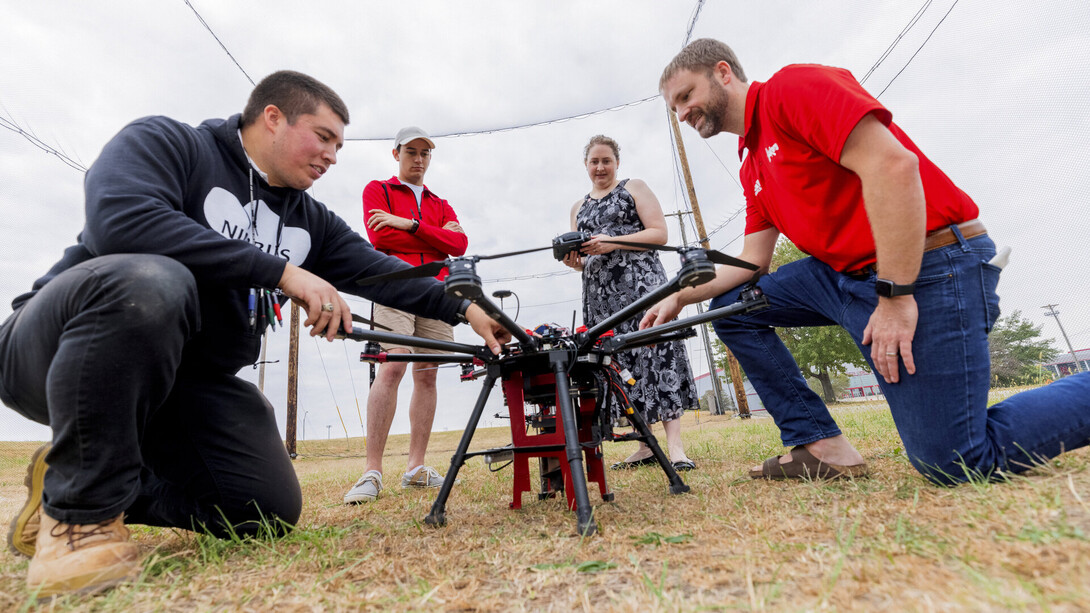
What: AFWERX, the innovation arm of the Department of the Air Force, selected the NIMBUS Lab to partner with Reach Power for a Small Business Technology Transfer Phase I contract. The collaboration will explore wireless power technology that could allow drones to remain deployed longer for communications and intelligence, surveillance and reconnaissance missions. The purpose is to reduce the operational burden of battery swaps and frequent recovery cycles. The project’s focus is on “perched” drones, which can remain in a fixed position rather than continuously flying. The researchers will evaluate these systems’ potential to serve as persistent, reconfigurable platforms for communications and sensing. The project builds on the NIMBUS Lab’s research on aerial vehicles and field robotics, including their applications in national security and other challenging environments.
“This project brings together Reach’s wireless power-beaming expertise with the University of Nebraska-Lincoln NIMBUS Lab research capabilities in autonomous systems, communications and field robotics,” Duncan said. “Together, we aim to evaluate how perched drones can serve as persistent, reconfigurable mission nodes for communications and sensing.”
Writer: University Communication and Marketing
Beavercreek Marketing experiences accelerated growth as NIC partner
Who: Jared Brosius, director of distribution tools, Beavercreek Marketing; Nebraska Innovation Campus
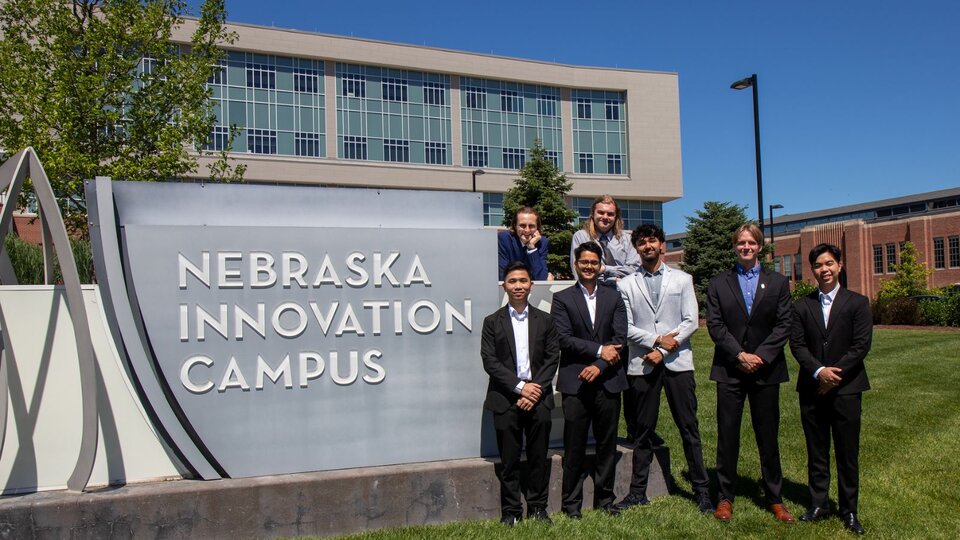
What: Beavercreek Marketing, a Grand Island-founded company focused on marketing solutions for Fiserv and financial institutions, is expanding to Nebraska Innovation Campus and taking advantage of the hub’s networking opportunities and resources. In April, Brosius moved the company’s distribution tools team to the Innovation Advancement Suites, which are serving as an interim landing spot while the group looks for permanent space at NIC. Brosius said the NIC location is generating momentum for the company: He and Beavercreek staff have connected with individuals and departments across the University of Nebraska ecosystem, including Industry Relations, Career Services, and the colleges of Engineering, Journalism and Mass Communications, and Business. These networking opportunities have opened doors to mentorship and speaking engagements for Brosius, which are chances for him to build Beavercreek’s brand. The NIC location has also been critical to generating interest in Beavercreek’s internship program: Before the move, the company often struggled to get a substantial number of applicants. Post-move, Beavercreek had 40 to 60 quality applications for just one role.
“NIC gave us an affiliation,” Brosius said. “Suddenly, we’re not just some random business. That really helped validate us, because most people had never heard of us before. And that’s such a huge jumping off point for a smaller company, to all of a sudden get so much visibility and reinforcement.”
Writer: Jacey Kent, NUtech Ventures
Great Plains Studies collaboration highlights Otoe-Missouria history through mural
Who: Artists Jessica Moore Harjo, Marci Black, Regina Waters and Paul Lucera; Center for Great Plains Studies
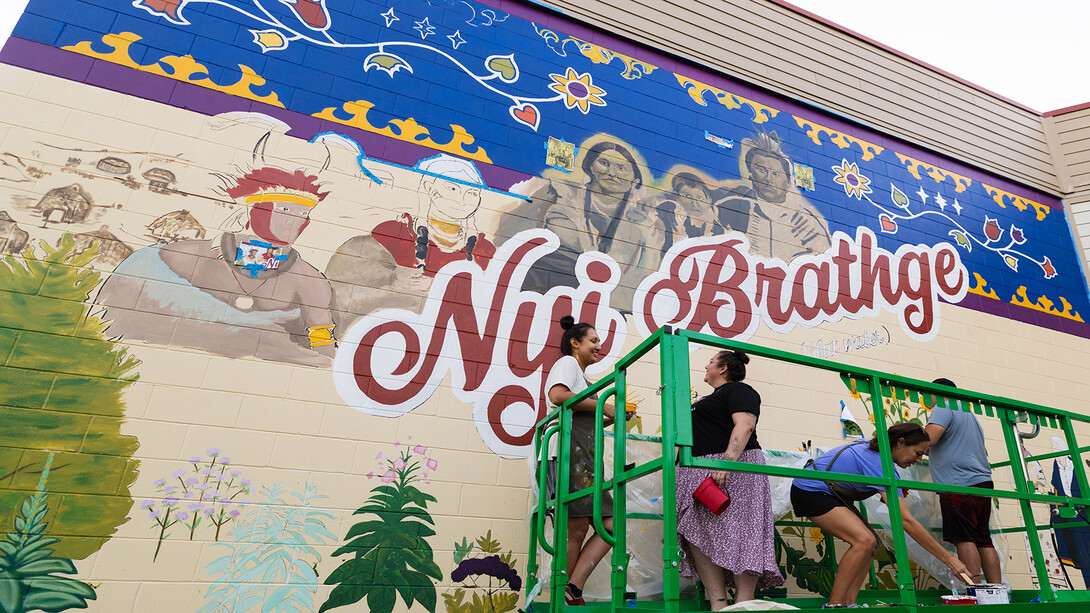
What: As part of the Mellon Foundation-funded “Walking in the Footsteps of our Ancestors: Re-Indigenizing Southeast Nebraska” project, Harjo is leading the creation of a mural on the east-facing wall of the Lincoln Indian Center aimed at providing viewers with a visual understanding of the Otoe-Missouria people. This aligns with the broader goals of the “Ancestors” project, a collaboration between the Otoe-Missouria Tribe of Oklahoma and UNL’s Center for Great Plains Studies that focuses on promoting healing and reconciliation by reconnecting the tribe with its ancestral lands in southeast Nebraska. Work on the mural began July 27 and will incorporate the work of Otoe-Missouria student artists, who will travel to Lincoln during a youth trip. The artwork includes floral appliqué designs, portraits of ancestors, a map of the area, nature elements and words in the Otoe-Missouria language – all woven together in a theme of resiliency and land. The design will feature the Otoe-Missouria word for Nebraska, “Nyi Brathge,” which means “flat water.”
“I hope viewers get a visual understanding of who Otoe-Missouria people are, while learning a few Otoe-Missouria words that will help to bridge connections,” said Harjo, an interdisciplinary artist, graphic designer and entrepreneur.
Writer: Katie Nieland, Center for Great Plains Studies