Dan Moser, April 10, 2026
In entertaining Slam talk, Lottes shares how cortisol prompts stress responses
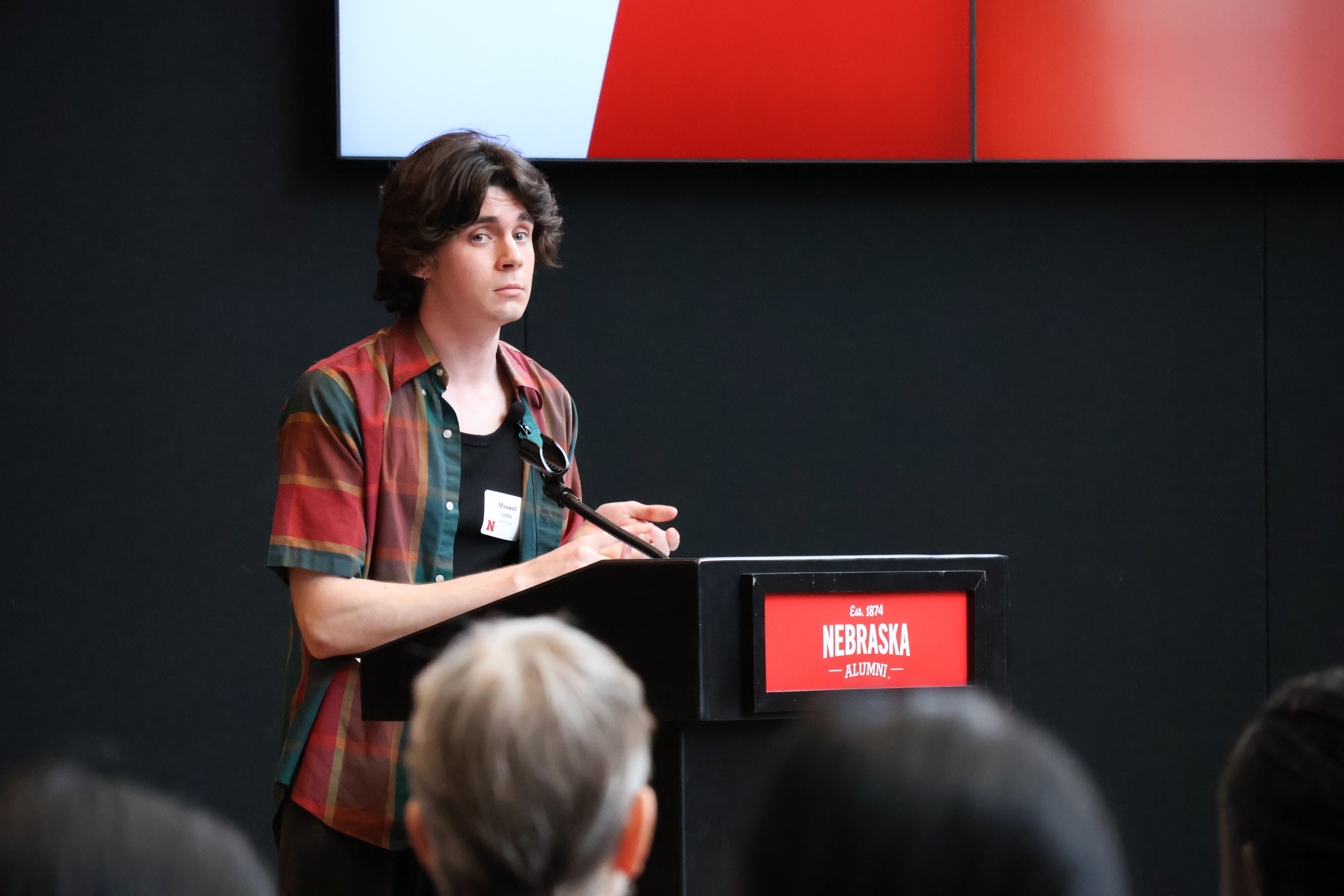
Nebraska psychology student Max Lottes delivered a spirited defense of sometimes misunderstood cortisol – a diva, to be sure, but a necessary, effective one, in moderation – to earn the grand prize in the 2026 Student Research Days Slam Thursday.
The Slam, celebrating its 10th year at the University of Nebraska–Lincoln, gives undergraduate and graduate students an opportunity to discuss their research in energetic five-minute presentations, with audience members choosing a winner.
Cortisol is a vital steroid hormone, produced by the adrenal glands atop the kidneys, that acts as the body’s primary stress regulator. It also manages metabolism, blood sugar, blood pressure and immune response, peaking in the morning to fuel energy. Chronic stress keeps cortisol levels high, causing weight gain and anxiety, while low levels cause fatigue and low blood pressure.
Lottes said cortisol – he personified it as Courtney Sol, the better to capture its drama queen rep – gets a bad rap. His talk was titled “Courtney Sol: The Untold Story of the Infamous Adrenocortical Steroid Hormone.”
“She’s known for her toxic behavior, stressing people out, making them fat, and for her messy divorce with her now ex-husband: Insulin,” he said. “For those who don’t know, their relationship has always been complicated, mainly due to religious differences.
“Courtney was raised catabolic, so she’s always trying to move sugar into the bloodstream and break it down to be used for energy, while Insulin was die-hard anabolic, so he’s always trying to take sugar out of the bloodstream and store it for later,” Lottes added.
“Famously, this all came to a head on an episode of The Real Housewives of the Hypothalamic-Pituitary Adrenal Axis.”
Cortisol is not perfect, “but in moderation, she really isn’t the villain that the media makes her out to be,” Lottes said.
“If you’ve got things to be stressed about, stress is exactly the emotion you want to be experiencing, and Courtney is exactly the [expletive] you want on your side.”
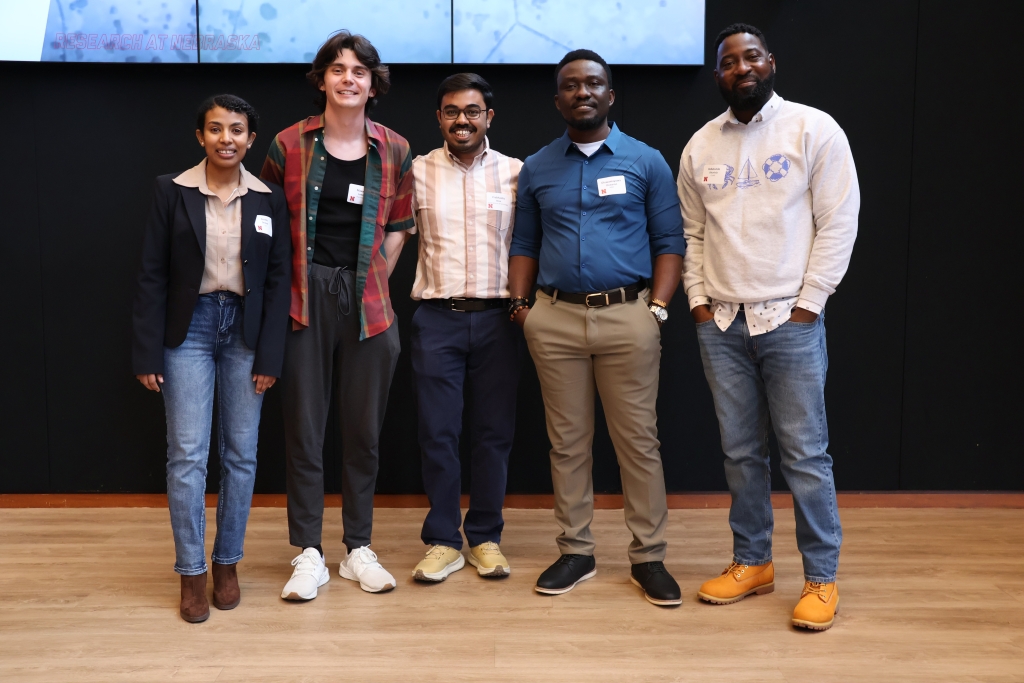
Lottes was one of five students to participate in this year’s Student Research Days Slam. Over the past 10 years, the event has involved a total of 47 Slammers from 23 departments and seven colleges, said Jocelyn Bosley, research impact coordinator and the Slam’s emcee.
The Slam included presentations by four other Slammers.
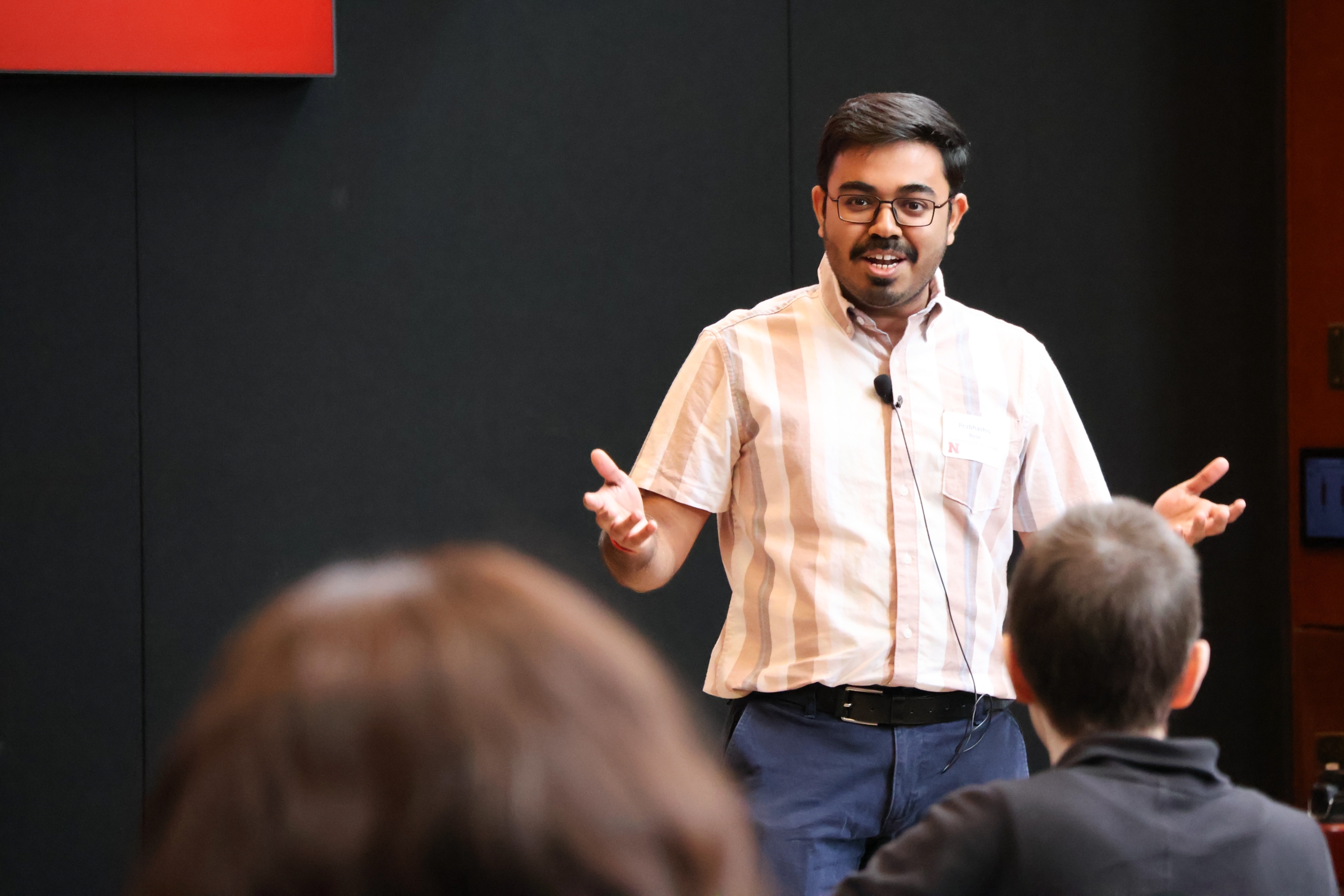
Prabhashis Bose, graduate student, food science and technology, “What’s Causing Your Gut Feeling?”
Bose’s parents wanted him to be the first doctor in his family. “I realized medicine isn’t my cup of tea. Instead, I wanted to become a doctor in food science.”
Bose described food science as “the study of the most intimate relationship in human biology — the conversation between what you eat, and who you become.
“And nowhere is that conversation louder, more complex, than in your gut.”
That “entire civilization” of microbes in every person’s gut plays a central role in health, Bose said.
“They are not just eating your food leftovers. They are producing neurotransmitters. Serotonin. Dopamine. Nearly 90% of your body’s serotonin — the molecule most linked to happiness and well-being — is produced not in your brain, but in your gut.”
“We assume the brain is in charge. Sending commands to all parts of the body. But 90% of the nerve signals on the gut-brain highway travel upward — from your gut to your brain. Your mood. Your anxiety. Your immune responses. All of it — shaped, in part, by what’s living inside your gut. So, when you say I have a gut feeling, that’s quite literally your gut feeling.”
Bose’s doctoral project involves Nebraska-grown crops: corn, sorghum and Great Northern beans. Plant-based diets have been eaten for centuries, often by communities with remarkably low rates of chronic disease.
Bose puts the grains through artificial digestion to see how they shift the microbial community differently in the fecal samples of an obese individual compared to a healthy one.
Zenebu Derbew, graduate student, civil and environmental engineering, “Smart Sands: Giving ‘Forever’ Chemicals an Expiration Date.”
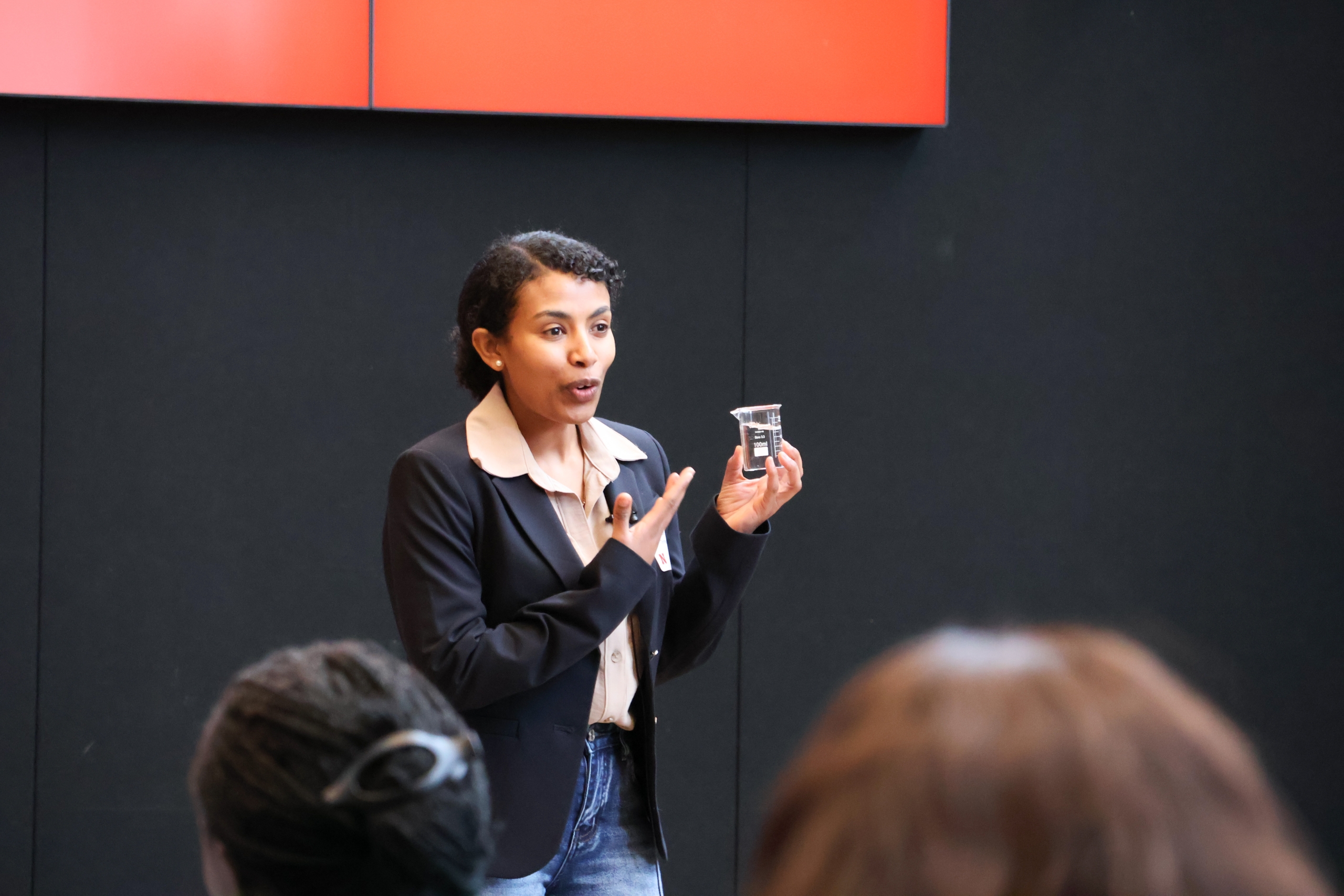
Derbew opened her presentation by holding up a glass of water.
“Have you ever wondered … what’s hiding inside this glass of water? It looks clear. It looks safe. It looks … refreshing. But what if I told you clear doesn’t always mean clean? Inside this glass could be a monster we can’t even see,” Derbew said.
She studies PFAS, which are “forever chemicals” linked to many adverse health effects including elevated cholesterol, cancer, reduced vaccine response, thyroid disease, reduced fertility and developmental issues in children. PFAS chemicals have been detected in 97% of tested Americans. Per- and polyfluoroalkyl substances are synthetic substances that do not break down in the environment, earning the “forever chemicals” label.
PFAS are found everywhere, Derbew said, including in nonstick pans, waterproof makeup, shampoo and even dental floss.
Derbew is building Smart Sands, a tool that uses sand to destroy the chemicals by breaking the bonds that keep them from coming back.
“Using machine learning, I can predict exactly how Smart Sands perform in any water system, whether it’s muddy like Nebraska stormwater, salty like San Diego seawater, or even acidic,” she said. “Instead of spending years in the lab trial and error, AI helps us design the best solution before it’s even built, in just 30 seconds.”
Babatunde Okunlola, graduate student, journalism and mass communications, “From Temporal to Timeless.”
Okunlola worries about the incredibly short lifespan of news stories, even the biggest of which have news cycles of only seven days. Others pass in hours, or even minutes, on social media.
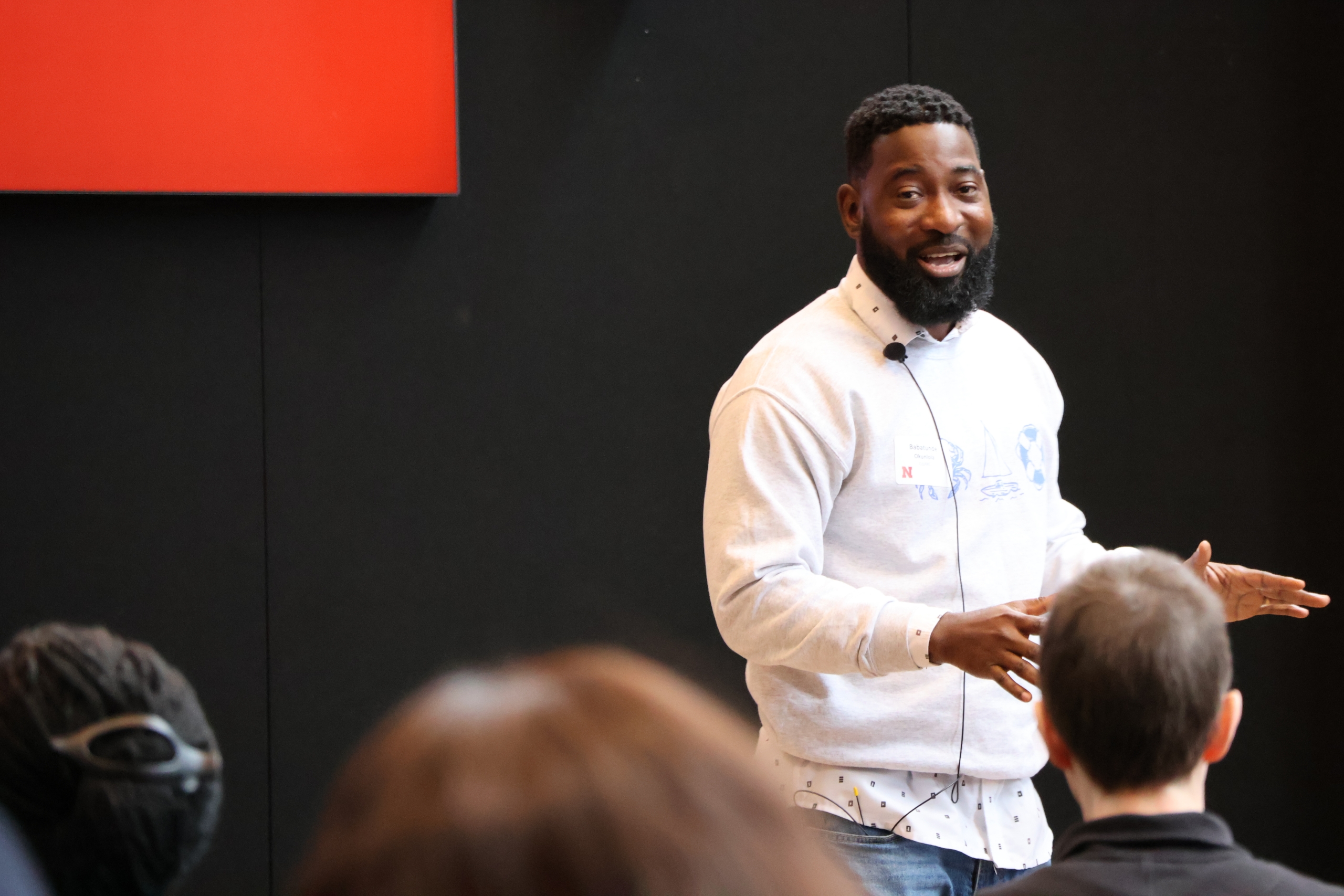
This rapid news cycle creates a significant challenge for journalists and researchers whose work requires in-depth investigation and analysis. Their findings can become outdated or overlooked very quickly.
Okonlola drew on his decade as a journalist in his native country Nigeria, where he told the story of the contamination by illegal gold mining of the Osun River. His reporting had an impact – the closure of mining licenses, for example – but three months later, the story had faded from public memory. The licenses quietly reopened and the river kept dying.
He went on to create the Saving the Osun River Project, a digital humanities archive documenting a decade of environmental degradation. The digital archive gave him a way to counter the fleeting news cycle, and he hopes the approach is used by others.
“Journalism has a timestamp. Stories get published and quickly fade from public memory, leaving vital narratives lost in the news cycle. Digital humanities gave me the tools to change that,” he said. “This is about more than one river. It’s a model for how journalists everywhere can use free, accessible tools to make their most important work timeless.”
He encouraged researchers to consider not only the importance of their work but also its preservation so it has long-term impact.
Oluwamayowa Oluwaniyi, graduate student, mechanical and materials engineering, “More Than a Tractor, More Than a Survey.”
When Oluwaniyi told people back home in Nigeria he studied agricultural engineering, they assumed, with a smile, that he was a tractor enthusiast. “And I’d smile back, because we were not talking about the same thing,” he said. “In their minds, they saw a man in a wide-brimmed hat, knee-deep in soil, holding a hoe or driving a tractor. To them, I was just a farmer with a fancy title. They didn’t see the thermodynamics of crop preservation or the fluid mechanics of irrigation—systems moving water across entire regions.”
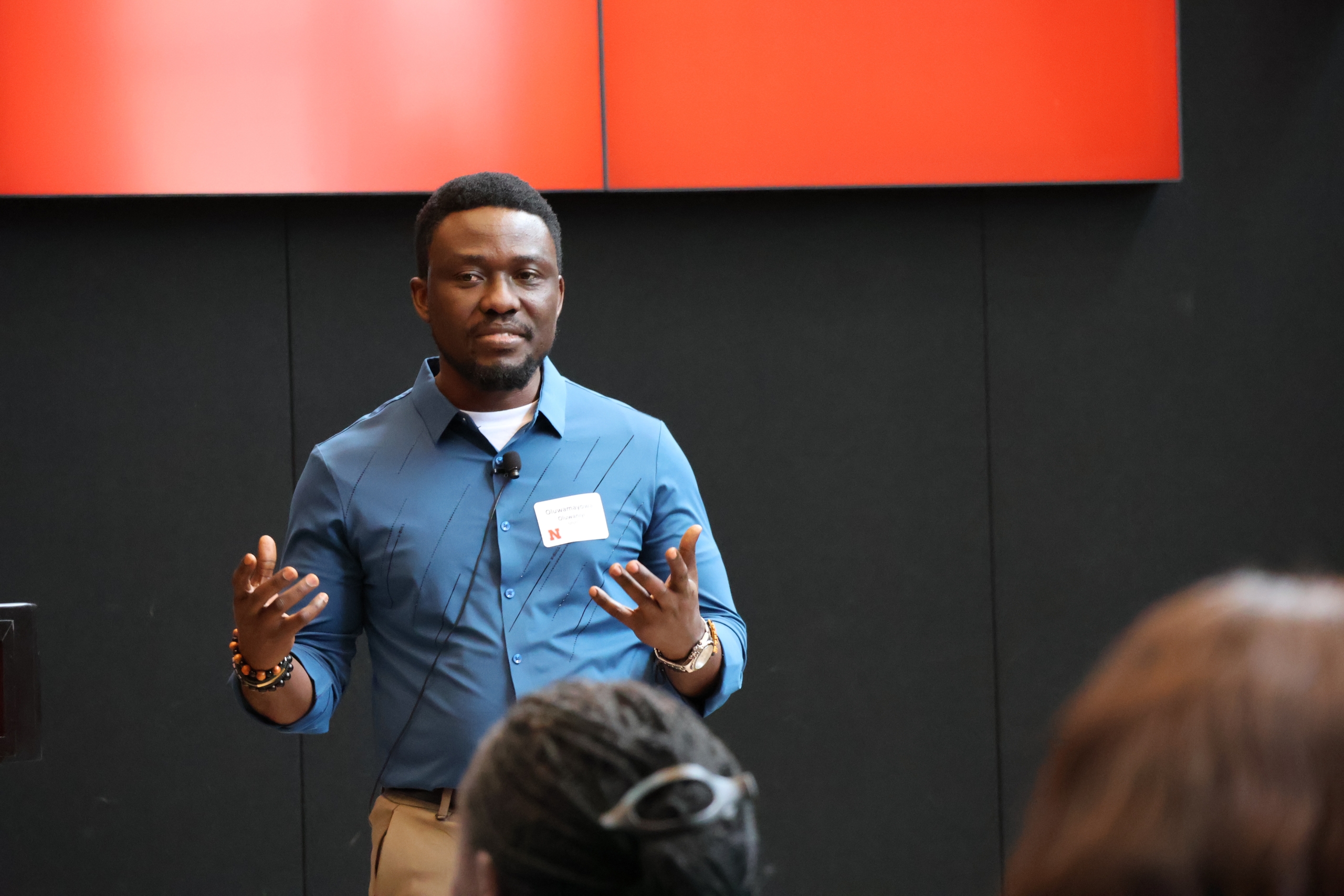
Now pursuing a Ph.D. in engineering education research, Oluwaniyi knows that engineering is not just about building things. “It’s about people interacting with systems.”
About 50% of students leave engineering, and Oluwaniyi is researching the reasons why.
“If agricultural engineering helps feed the world, then engineering education research helps shape the people who will build that world.”
The Slam, part of the annual Student Research Days, was co-sponsored by the Office of Research and Innovation, Office of Graduate Studies and the Office of Undergraduate Research and Fellowships.