Posted January 9, 2026 by Dan Moser
This is the second story in a series featuring UNL’s research core facilities and their capabilities.
The University of Nebraska-Lincoln’s Bureau of Sociological Research bills itself as a one-stop shop for researchers needing rigorous data collection and analysis.
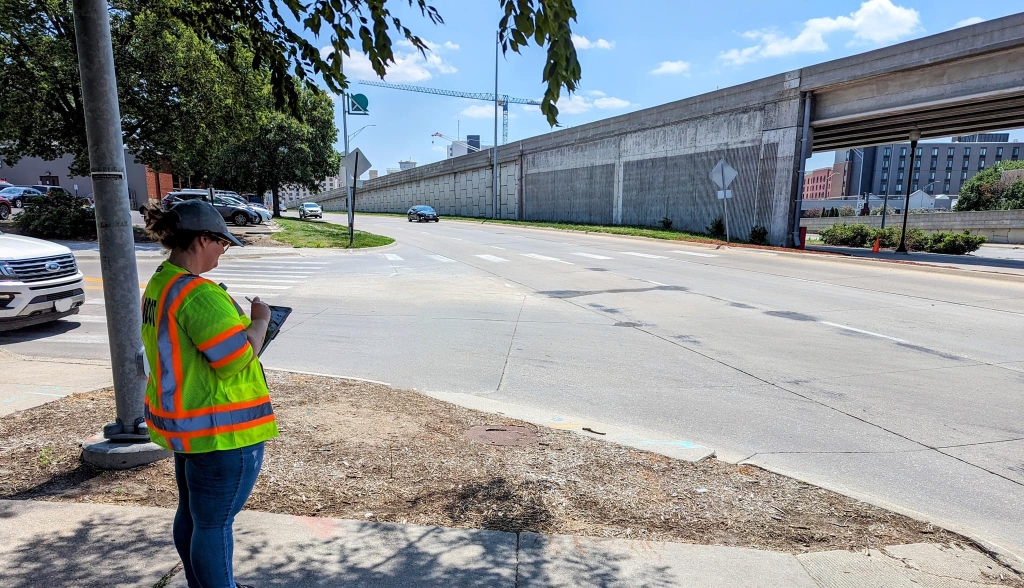
BOSR supports projects at every stage: study design and sampling, fieldwork and data collection, analysis and reporting. The bureau conducts telephone, mail, web and in-person surveys, conducts focus groups and organizes field studies. Perhaps its best-known field study is the annual seatbelt-use survey by UNL students who fan out across the state.
In 2025, BOSR completed 58 projects for faculty, staff and students and 71 projects for the state of Nebraska and other entities. The self-funded center raised $2.3 million in revenue and worked with 16 grants in process. For more information, see the bureau’s annual report.
“The process of data collection has changed over the decades,” said Amanda Ganshert, assistant director for research and methods. It used to be largely by phone in the days when people had landlines – and answered them. Now, surveys are conducted mostly via mail.
Ganshert has been a BOSR employee for 14 of its 60 years, beginning as a telephone interviewer in college.
Getting people to respond to surveys always has been a challenge, she said.
“We saw a bump in response rates during COVID. We think people were stuck at home and had nothing else to do, so they did our surveys,” a phenomenon reported by other survey research operations.
After COVID, response rates dropped. Even so, Nebraska has some of the highest response rates in the country.
“We think that’s because of [being] Nebraska Nice,” Ganshert said.
BOSR has offered incentives to encourage participation.
One of BOSR’s signature projects is the Nebraska Annual Social Indicators Survey, a probability-based omnibus survey conducted once or twice a year using address-based samples. NASIS includes long-running core questions — some tracked for more than 15 years — that allow for trend analysis, alongside client-purchased survey questions sold by the page. Ganshert said NASIS is one of the most cost-effective ways for Husker researchers to gather reliable statewide insights.
Clients’ questions in the NASIS over the years reflect societal shifts. A few years ago, hot topics included transgender rights and religious-based exclusions; more recently, researchers have turned their attention to issues such as microplastics, artificial intelligence and emerging agricultural practices.
Staff include about a dozen full-time project staff, several supervisors and roughly 50 interviewers with plans to hire more. Although housed on campus and using shared services like HR and payroll, the bureau is entirely funded by its projects.
“Someone recently said that they know they can come to us when they feel in over their heads,” Ganshert said. “And we’re able to help them at any point in the process.”