
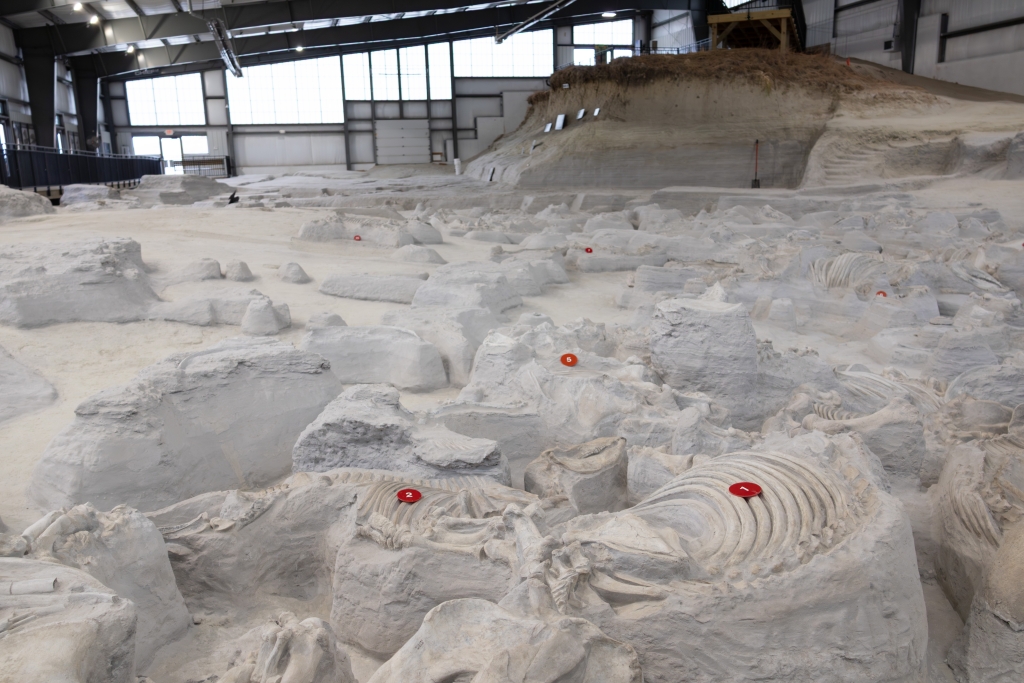
Various animal skeletons, most prominent of which are prehistoric rhinos, are labeled for easy visitor verification within the Hubbard Rhino Barn and Ashfall Fossil Beds State Historical Park outside of Royal, Neb.
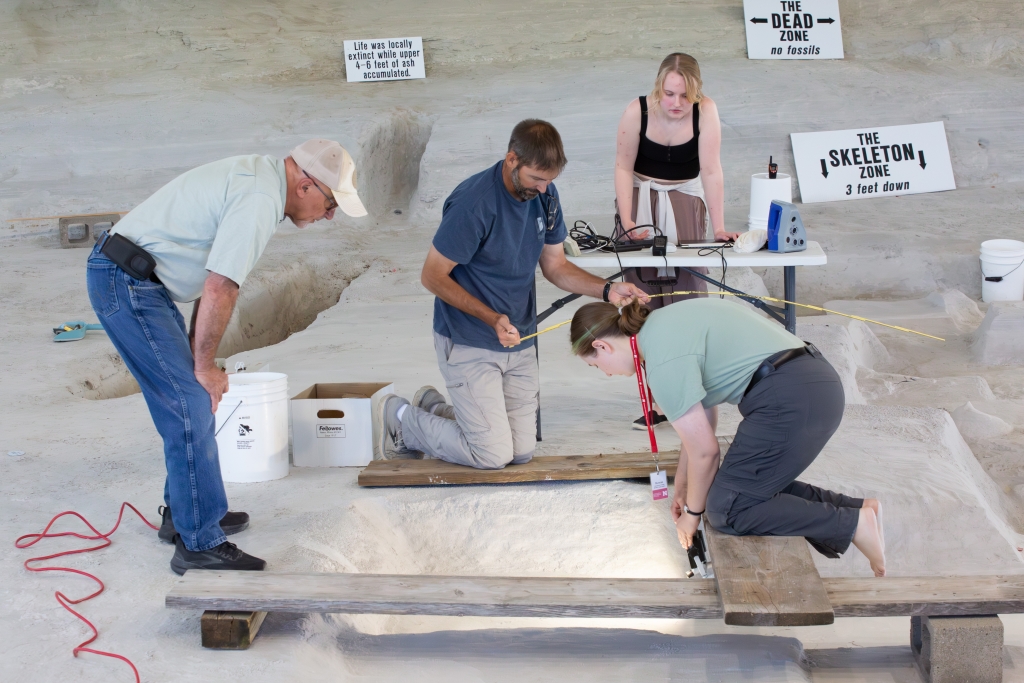
A team of staff, researchers and interns use 3D scanning software to preserve the paw prints of a “bone crushing dog” left in the ash deposit. They include, from left: Rick Otto, retired superintendent of Ashfall Fossil Beds; Shane Tucker, highway paleontologist with the Nebraska State Museum; Jennifer Lee, senior, Nebraska State Museum intern; Rowan Hulpke, senior, Ashfall Fossil Beds intern.
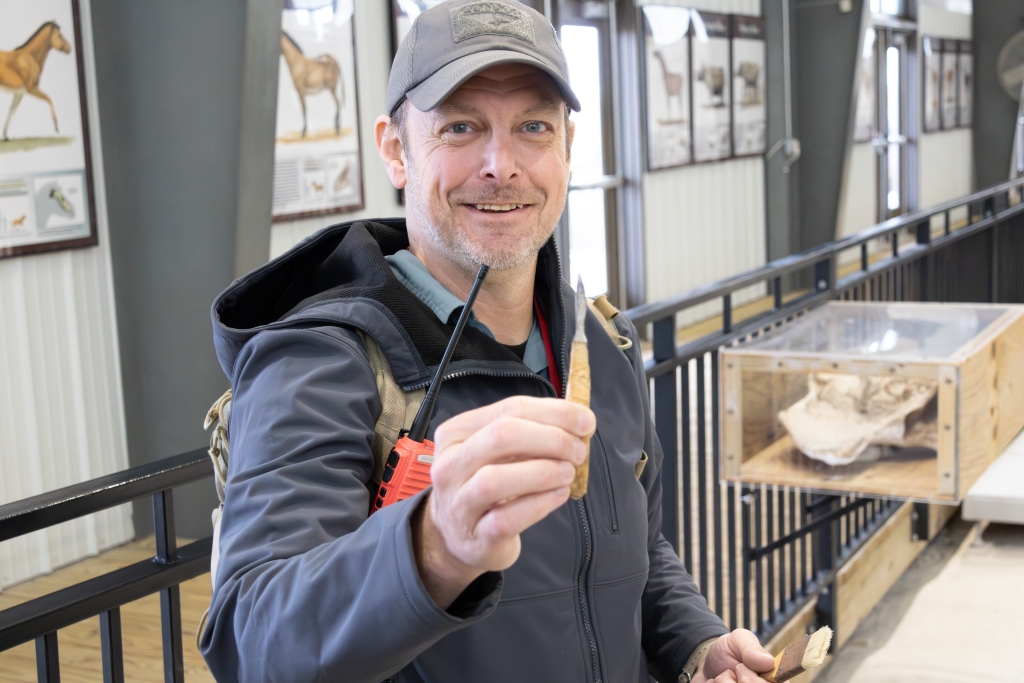
Sam Matson, superintendent of Ashfall Fossil Beds State Historical Park, displays one of the many, tiny, tools researchers use to undercover fossils within the layers of ash inside the barn.
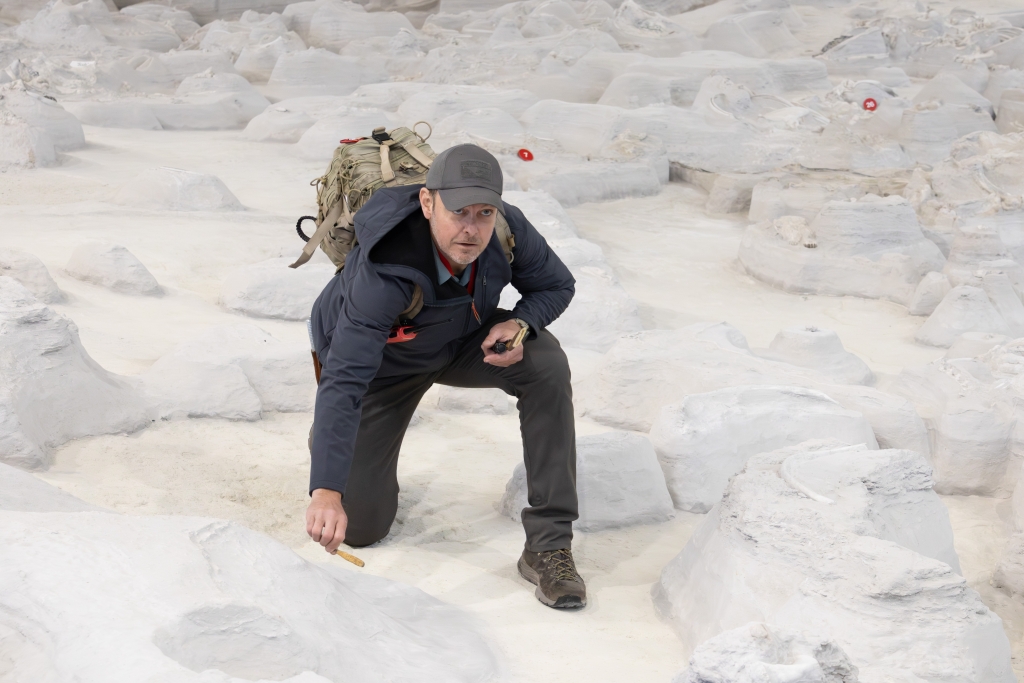
Sam Matson, superintendent of Ashfall Fossil Beds State Historical Park, taps on the surface of the ash layer. Due to presence of microscopic air bubbles throughout the ash layer, tapping on said layer produces a different sound than tapping on the rock below. This helps researchers and interns determine when they’ve reached the bottom.
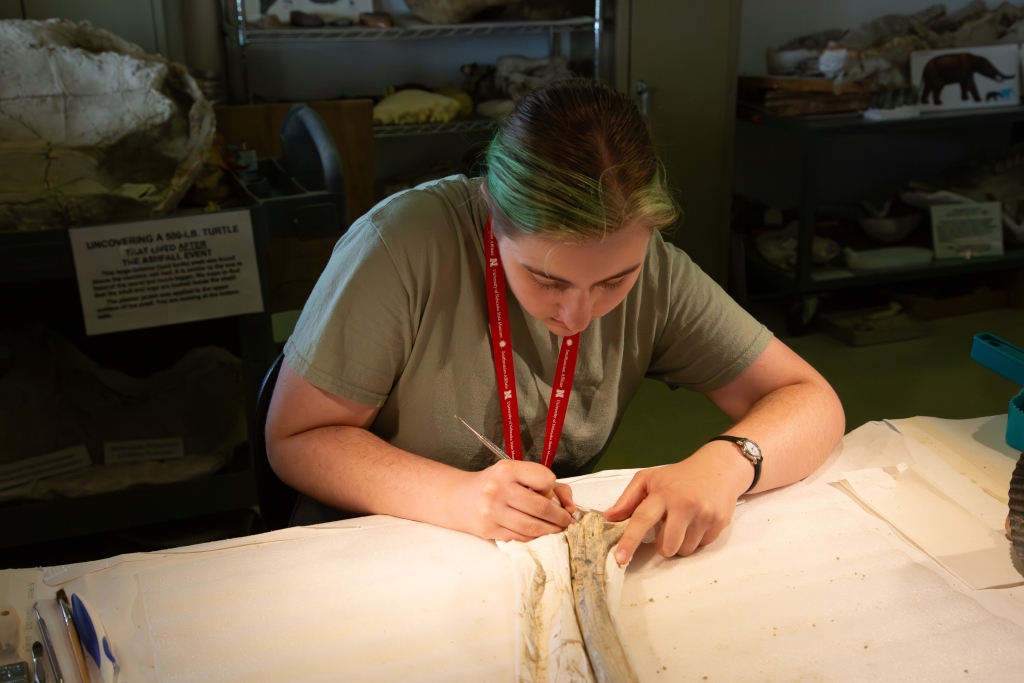
Intern Rowan Hulpke of Fort Collins, Colo., scrapes away at glue in the crevice of a large bone at the lab at Ashfall Fossil Beds State Historical Park. Hulpke, spending her summer in Royal, is a senior studying geology at Macalester College in Minnesota.
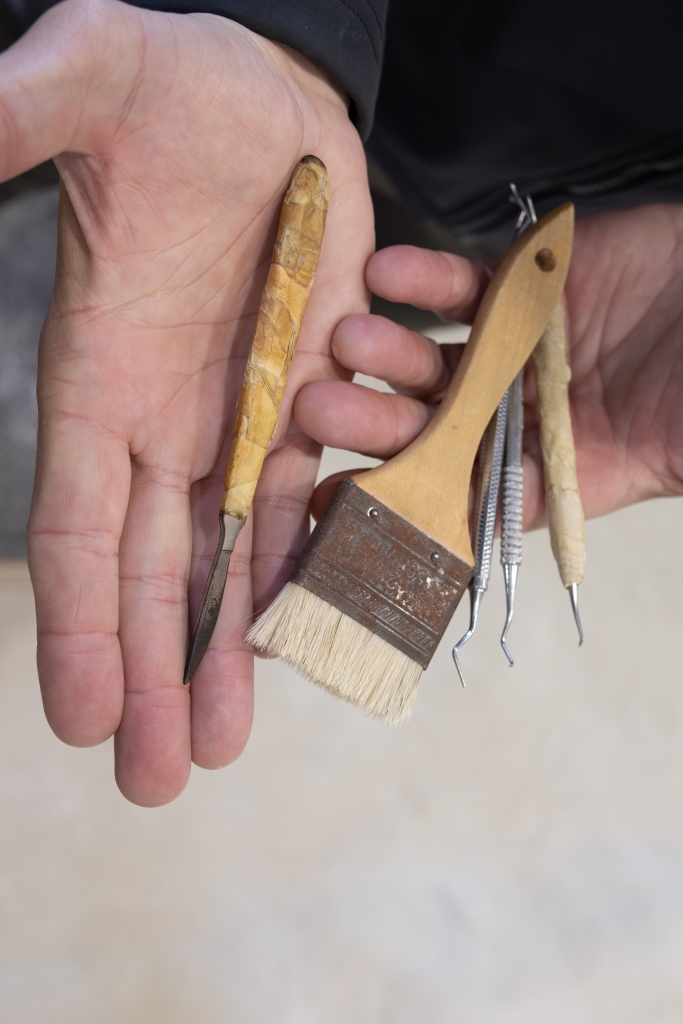
Small tools like these pictured, including stiff paint brushes and dental picks, are used to gently scrape away at the ash layers covering fossils inside the Hubbard Rhino Barn.
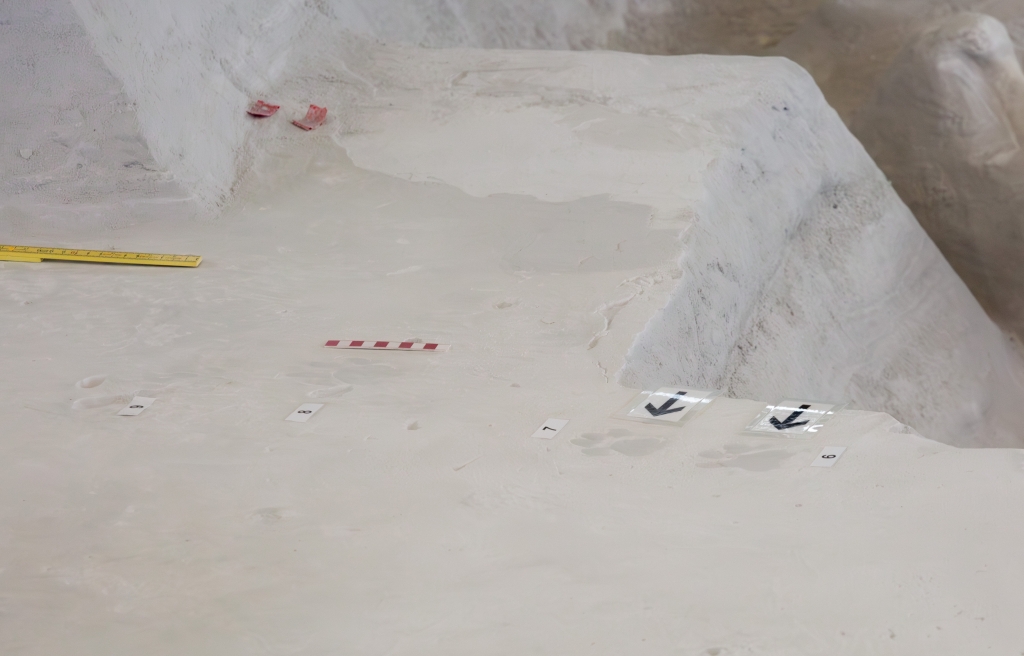
Small dog tracks, like those pictured, were left behind in an ancient algae layer around the same time the watering hole was being slowly covered by ash. Skeletons from the bone crushing dogs responsible for these tracks have yet to be found in the area.