
Posted April 30, 2026 by Dan Moser
The University of Nebraska-Lincoln is strengthening its partnership with the city of Lincoln to help address local challenges and issues.
That partnership has been recognized as a national leader in university-government collaborations, as it was one of several included in a report on how university research can help local governments.
Lincoln Mayor Leirion Gaylor Baird is second vice president of the United States Conference of Mayors and chairs the Mayors and Metro Universities Task Force. That expertise is helping Lincoln and UNL lead the way in this area.
“The Civic Research Agenda: A national study of local government research needs and roadmap for university collaboration” was issued this spring. It found that the number one research need of cities and counties is housing. Other priorities are community engagement, economic development, service delivery, climate and energy, transportation, and human services like education, public safety and health.
Universities can help address these needs.
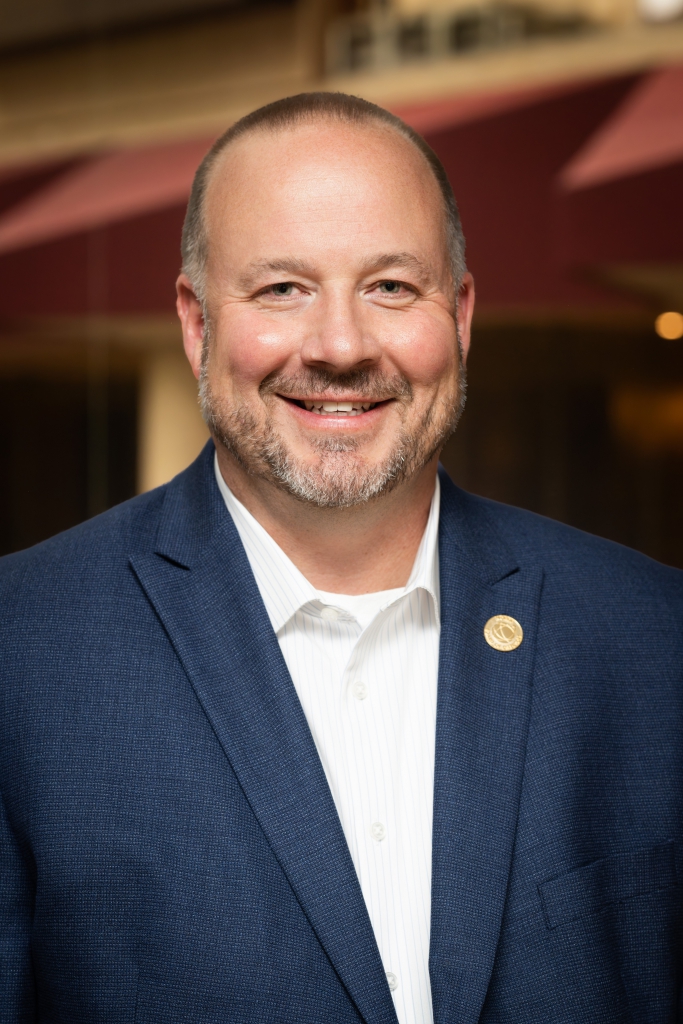
“The premise is that maybe cities aren’t taking enough advantage of the expertise and resources and workforce opportunities that exist” at the universities within their boundaries, said Nathan Meier, associate vice chancellor for research, capacity and competitiveness at UNL.
Meier is among the university representatives who have been working with city officials on the initiative, coordinated nationally by MetroLab, which is part of the Federation of American Scientists.
Jen Nelson, interim vice chancellor of research and innovation at UNL, said the university’s partnership with the city is important.
“The University of Nebraska-Lincoln is proud of our partnership with the city of Lincoln, and we are excited to explore how we can nurture it further to address some of the greatest challenges the city faces and partner to develop potential solutions,” she said. “I think, too, that both the university and city can take pride in the fact that our partnership is one of seven city-university collaborations that was explored in this national report.”
The project identified Lincoln’s priorities as food insecurity, affordable housing, economic mobility, climate resilence and environmental planning, and data-informed decision making.
UNL has researchers and resources available on most of those issues, Meier said. Municipal leaders, nonprofit representatives, community members and university faculty are talking about how to prioritize and address them, starting at a November 2024 workshop facilitated by MetroLab.
It’s a new role for many faculty, whose research often focuses on state, national and global needs rather than purely local ones. But it’s an important role for the university to take on, Meier said.
Kim Morrow, chief sustainability officer for the city, said, “We are aware that we’re sitting right next to an enormous resource in our backyard. … I think, on both sides, we recognize that there are huge opportunities to collaborate, but neither entity really knew who to contact or how exactly to do that.”
MetroLab’s initiative provided the impetus to jump-start the partnership, Morrow said.
The city is particularly interested in assistance with data gathering and analysis.
“Sometimes we hire consultants to do that work, but we thought, gosh, wouldn’t it be great if we could bring in our neighbors at the university for some of these needs when we have them?” Morrow said.
Morrow noted that few UNL faculty grew up in Lincoln or, for that matter, in the United States. She said a side benefit of this collaboration is for researchers to “grow some deeper roots in the community where they find themselves.”
“In some ways, the report provides a sort of North Star for our university-city partnership. It provides a platform for alignment. It’s helped us align with the city’s interests, needs and priorities,” Meier said.
“The conversation in Lincoln didn’t end with our workshop. It has continued since that time. We’re now pursuing a master research agreement with the city,” Meier said.
In addition to continued meetings between UNL faculty and city of Lincoln staff, Meier expects additional outreach engagement opportunities in the fall. Morrow expects further collaboration to be “an organic process.”
Other local governments included in the report are Columbus, Ohio; Syracuse, New York; Kansas City, Missouri; Allentown, Pennsylvania; Guilford County, North Carolina; Baltimore, Maryland; Houston, Texas; and Little Rock, Arkansas.