center for the prevention of obesity diseases
Dan Moser, March 2, 2026
Biomedical and Obesity Research Core offers equipment, expertise, support
This is the third story in a series featuring UNL’s research core facilities and their capabilities.
The Biomedical and Obesity Research Core plays a key role in scientific discovery, offering researchers access to advanced equipment, technical expertise and hands‑on support that individual labs cannot afford or maintain.
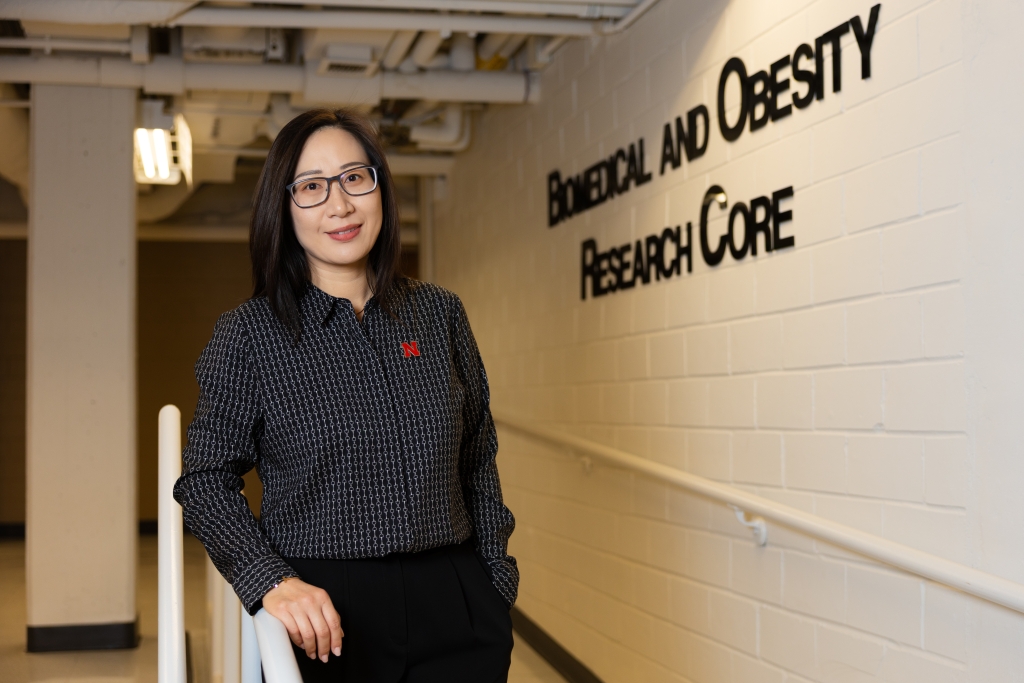
Part of the Nebraska Center for Prevention of Obesity Diseases, BORC serves as a “one‑stop shop” for reliable, high‑quality data. Its mission is to strengthen biomedical research across UNL and the broader NU system by supporting every stage of a project—from experimental design and training to data acquisition, analysis and even grant preparation, said Jingjie Hao, director.
NPOD is an NIH-funded Center of Biomedical Research Excellence (COBRE) focused on preventing, treating and curing obesity and related diseases. BORC contributes “by providing the experimental backbone that makes the research possible,” Hao said.
BORC operates on a fee‑for‑service model, but its reach extends far beyond campus. In addition to UNL and NU researchers, the core works with scientists from other universities, medical centers, federal agencies such as the U.S. Department of Agriculture, and businesses seeking specialized metabolic or biomedical analyses.
BORC’s facility includes two offices and a 2,000-square-foot laboratory in Leverton Hall, plus two rooms for in vivo study in the Life Sciences Annex. Additionally, to meet users’ needs for large-capacity, high-speed computational solutions, BORC networks with the Holland Computing Center.
The core maintains more than 50 pieces of specialized equipment.
Researchers come to BORC for metabolic cages that track every breath a mouse takes, for a clinical‑grade chemistry analyzer that can process samples with hospital‑level precision, for a GeoMx Spatial Profiler that maps gene and protein expression. Other tools include image flow cytometry systems and an anaerobic chamber for microbiome research.
Beyond the equipment, Hao said, the core offers expertise and assistance — training users, running assays and collaborating to ensure experiments are designed and executed correctly.
“We work side by side with users,” added Hao, a research assistant professor of nutrition and health sciences.
“What I find most rewarding is knowing that the work we do here at BORC can directly support the research of students, postdocs and faculty across the university.”
Trained users are given 24/7 card access to the facilities, giving faculty, students and postdocs the flexibility to run their experiments around their schedules.
As obesity and metabolic research continue to grow, including fields like extracellular vesicle biology, microbiome science and precision metabolic profiling, BORC aims to remain at the forefront in providing the infrastructure, expertise and collaborative environment needed to drive the next wave of biomedical discovery.
The work frequently bridges animal and human research, reflecting the interdisciplinary nature of modern biomedical science.
Obesity-related diseases are among the fastest-growing areas of biomedical research, and NPOD’s membership spans multiple disciplines. BORC’s centralized infrastructure helps connect these researchers and supports studies that cross traditional boundaries.