
Research Core/Shared Facilities
UNL Core/Shared Research Facilities are centralized research resources that provide access to unique and highly specialized technologies, training, expert technical services and consultation on a fee-for-service basis. They have dedicated personnel, equipment, and space for operations and may be housed in a variety of organizational units, including schools, colleges, departments and institutes. Core facilities recover their costs through user fees charged to an investigator’s funds, often based on research grants. These facilities are essential and cost effective for researchers who cannot economically replicate complex instruments and techniques within their own laboratories.
Office of Research and Innovation strives to build a community and to improve administrative processes to increase efficiency and capacity, and to provide training and development opportunities. The team is committed to supporting researchers in achieving their goals and advancing scientific progress.
Mission
Research Core/Shared Facilities vary in size and scope but share a unified mission to offer a range of highly specialized services that strategically enable and accelerate your research outcomes on any budget, scale or timeline.
External Partners
UNL Core Facilities provide flexible, pay-for-use access to advanced research instruments and services for organizations of all sizes. With a strong commitment to collaboration, we support external for-profit and nonprofit partners and offer a streamlined path to identify and connect with the right facilities, expertise, and resources.
FEATURED FACILITY
Cryo-EM
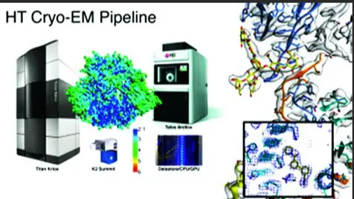
Located in the Morrison Center, the CryoEM Core Facility has a state-of-the-art Glacios 200kV electron microscope available for structure determination of protein, nucleic acids, and other molecules of biological interest, including small molecules in a crystalline state. CryoEM Core services include:
- Single-particle CryoEM;
- Cryo-electron tomography (CryoET) of thin specimens;
- Micro-crystal electron diffraction (MicroED);
- Sample preparation;
- Comprehensive data collection and analysis of CryoEM samples;
- Sample storage and shipping; and
- Data processing.